Securing high-authority AI citations: a digital PR guide

"Authority" means something different to an AI assistant than it does in a PR report. An assistant does not rank publications by domain rating: it cites the pages that answer the question it was asked, and often they are not the ones a campaign pitched. This guide is for tech brands that want their coverage to be cited in ChatGPT, Gemini and Google AI Mode. It shows what these assistants cited in one UK tech category, and the steps that follow from it. It does not promise a citation, because nobody can.
The short answer
- No tactic guarantees a citation. Assistants choose their sources per question, and the choice changes from one update to the next. Treat any promise of guaranteed placement in AI answers with suspicion.
- A high-authority citation is a page, not a domain. What gets cited is a specific page that states a clear fact or compares options, on a site the search index already trusts for that topic.
- Find the pages first, then pitch. Track your buyers' questions in the UK, list the pages each assistant cites, and work on those that name your competitors and not you.
- Build one citable asset. A page with original UK figures, a method and a date gives journalists and assistants something to quote.
- Measure on the same questions before and after. A placement that is not cited is a reputation win, which is still worth having, but it is not an AI visibility win.
What assistants cite in a UK tech category
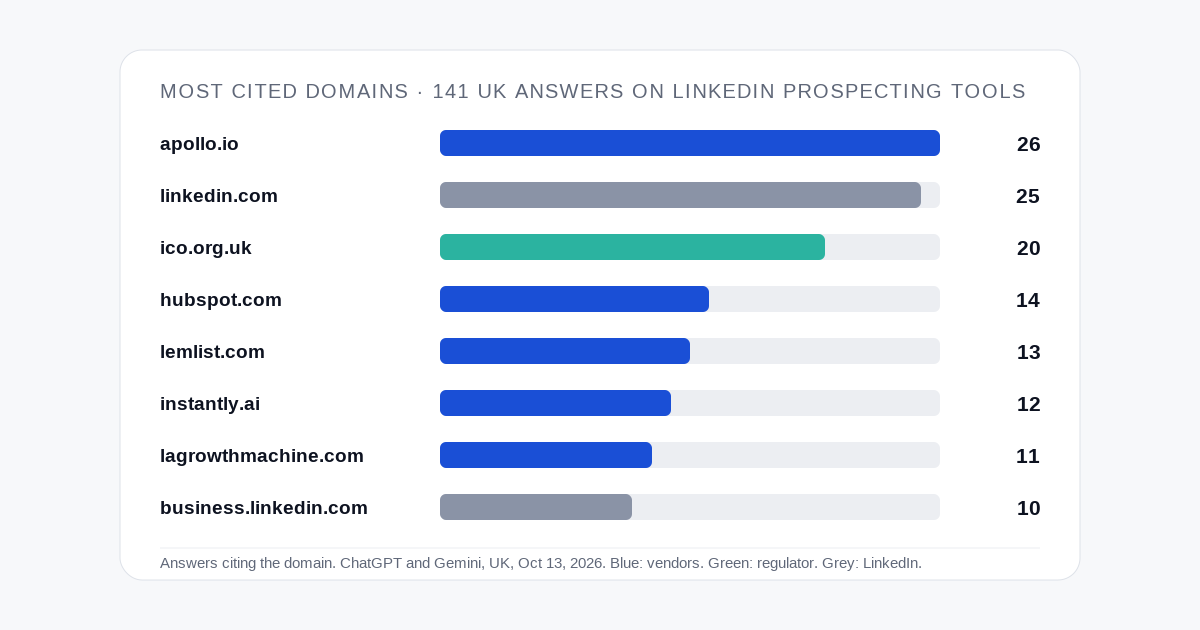
Take the prospecting tools UK founders, recruiters and sales teams ask about. In our study of LinkedIn prospecting tools, we asked ChatGPT and Gemini 72 buyer questions from the UK on October 13, 2026: which tool to automate LinkedIn outreach, which cold email platform, where to find contact data, whether it is legal. That made 141 answers. 106 of them cited at least one source, from 203 different domains.
What a PR team can take from it:
- The vendors' own pages come first. Apollo.io's site is cited in 26 answers, HubSpot's in 14, Lemlist's in 13, Instantly's in 12. Their product pages, guides and help centres answer the question directly, so the assistants use them. Your own site is your first citable asset.
- The third party with the most weight is a regulator. The UK Information Commissioner's Office (ico.org.uk) is cited in 20 answers, third overall, on whether cold outreach and contact data are legal under UK GDPR and PECR. On compliance questions, an official source beats any trade article. A tech brand that explains the rules clearly, and links to them, earns a place next to that source.
- LinkedIn itself is a source. linkedin.com and its business and UK pages appear in 25, 10 and 5 answers: articles and posts on the platform are read for questions about it.
- No press, no review platform. None of the 203 domains is a national newspaper or a software review site, and Reddit and Medium appear in two answers each. For this category, coverage in the press would not have reached these answers; pages that answer the buyer's question did.
- The tail is long. 203 domains for 106 answers: most sources are cited once or twice. A single placement rarely decides an answer, but a page that several assistants cite for one question can.
This is one category, asked in the UK on one day. Another category will have other sources: consumer categories, for example, lean much more on review sites and the press. Run your own questions to see yours. We do not show a client case study here, because we have not published a UK campaign measured before and after. What we can show is what the assistants cite, and how to measure your own campaign (step 6).
Six steps to earn citations that carry weight
1. Track your buyers' questions in the UK market
Answers differ by country: the same question in the UK and in the US can cite different pages. Set the location to the UK, ask the questions UK buyers ask (comparisons, "best X for", "alternatives to", pricing and compliance questions) and keep the 20 to 50 that matter. See how to write prompts your customers ask.
2. List the pages cited, and keep the gaps
For each answer, record the cited pages and the brands named. Then rank the domains and pages by the number of answers that cite them, per assistant. Your targets are the pages that are cited often and name your competitors without you. Which sources assistants cite is covered in which sources AI assistants cite.
3. Sort the targets by how you can get on them
| Kind of page cited | What gets you onto it | Effort |
|---|---|---|
| Comparison and "best of" lists | A short facts sheet to the author: what you do, who for, price, what differs, a link to proof. Ask for a correction or an addition, not a favour. | Low to medium |
| Trade and specialist press | An expert comment or a data story the editor can use, with named people and figures. UK trade titles often take UK data that international ones do not. | Medium |
| Review platforms | Complete profile and genuine customer reviews. Do not buy reviews: it breaks the platforms' rules and the law. | Medium |
| Communities (Reddit, LinkedIn) | Answering real questions with your name and role visible. Disclose that you work for the brand. | Continuous |
| Guides by agencies and vendors in your field | Contribute a quote, a figure or a case to a guide that is already cited, or publish a better one on your own site. | Medium to high |
4. Publish one citable asset on your own site
Coverage needs something to point to. A page with original figures from your own data (UK customers, UK market, your product's usage) works better than an opinion. For each study:
- Open with the finding: one sentence with the number, the sample and the date.
- Publish it as a web page with headings, a table and the method. Link the PDF from it, do not replace the page with it.
- Name things the same way everywhere: your company, product and study, in the page, the press release and the pitch.
- Give the three lines you want quoted, with the link, to every journalist you contact.
- Date it and update it each year, and say so on the page.
This is also the page you link from your blog and from your AI visibility page, so that assistants reading your site find it. The wider picture of how coverage reaches AI answers is in digital PR for AI visibility.
5. Pitch with facts, and keep paid coverage honest
An editor or an assistant can only repeat what is clear. Pitch one claim you can prove, with the source, and make the brand name unambiguous. In the UK, paid, sponsored or incentivised coverage and affiliate links must be labelled as advertising under the advertising and consumer rules (ASA and CMA guidance). Label it: an unlabelled paid article risks a ruling, and assistants and readers both lose trust in the source.
6. Measure on the same questions, before and after
Take the baseline before the campaign, then track the same questions on the same assistants, in the UK, for several updates after it. Compare:
- Mention rate: the share of answers that name you, overall and by assistant.
- Citation of your coverage: whether the answers cite the articles you placed or your study page. This is the direct proof that a placement works.
- Citing domains: how many different sites cite you or name you.
- Share of voice against the competitors named in the same answers, and the tone of what is said.
Allow weeks for assistants that search the web to pick up new pages, and read the trend over several updates: one answer proves nothing. Count links separately, as backlinks vs LLM citations explains.
Tools to track AI citations
You need a tool that records the pages cited in each answer, in the UK, and not only whether you are mentioned. Rempa (our product) records the cited pages for every answer, ranks the domains for your questions, and recommends the sites where competitors are cited and you are not, by assistant and market. See the best AI visibility tools in 2026 for prices and coverage.
Frequently asked questions
Can digital PR guarantee that my brand is cited in AI answers?
No. Assistants choose sources per question and the choice changes between updates. PR can raise the chances, by getting your brand onto the pages already cited for your buyers' questions and by giving them a clear, citable page of your own, and tracking shows whether it worked.
Which UK publications do AI assistants cite for tech brands?
It depends on the question and the assistant. In our study of LinkedIn prospecting tools in the UK, the most cited sites were the vendors' own pages, the Information Commissioner's Office and LinkedIn; no national newspaper or review site was cited. Track your own questions with the location set to the UK to see which sites matter in your category.
Is a high domain rating enough to be cited?
No. Assistants cite pages that answer the question, and a specialist page on a smaller site is often cited over a high-authority site that does not address it. Domain rating is a weak guide on its own.
How long before new coverage shows up in AI answers?
Assistants that search the web can cite a new page within days or weeks, depending on how fast it is indexed and how well it ranks for the question. Changes to what models know from training take far longer.
Do I need a different approach for the UK than for the US?
The method is the same, but the questions, the sources and the competitors differ by country. Track in the UK, with UK buyers' wording, and use UK data in your studies.
Sources
- Rempa, LinkedIn prospecting tools in the UK: 72 questions asked to ChatGPT and Gemini from the UK, October 13, 2026 (141 answers, 106 with at least one cited source, 203 domains).
More from the blog
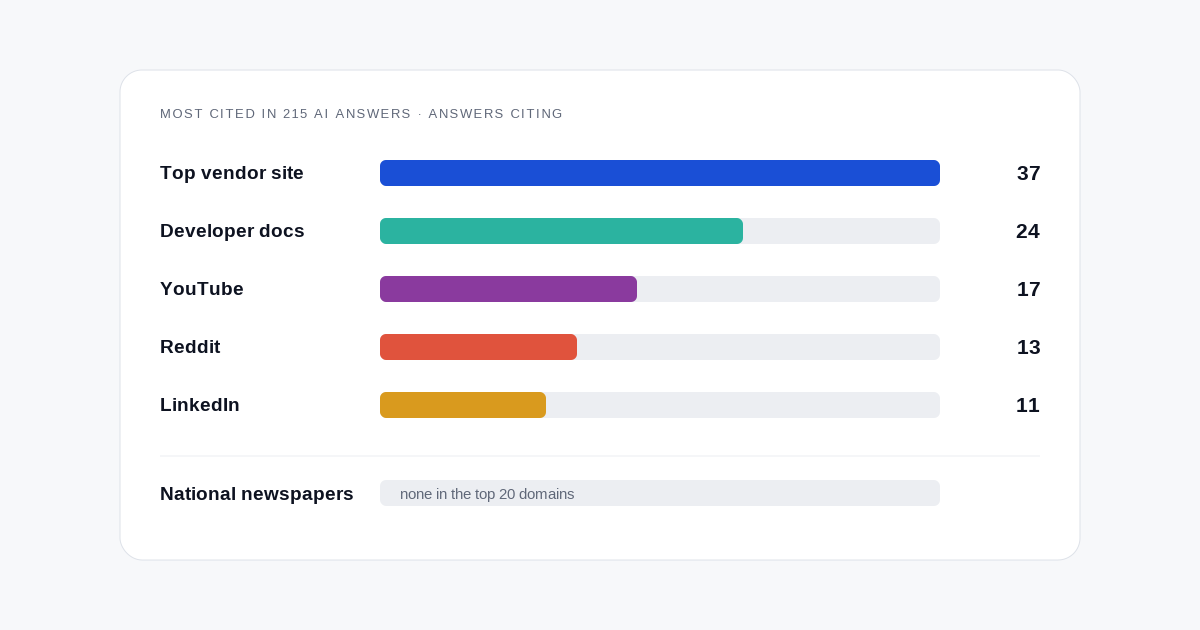
Digital PR for AI visibility: how to get your brand cited in ChatGPT, Gemini and Perplexity
Assistants cite a different set of sites than the ones PR teams pitch. How coverage reaches AI answers, which tactics get your brand cited, and how to measure a campaign on AI mentions.
Read the article →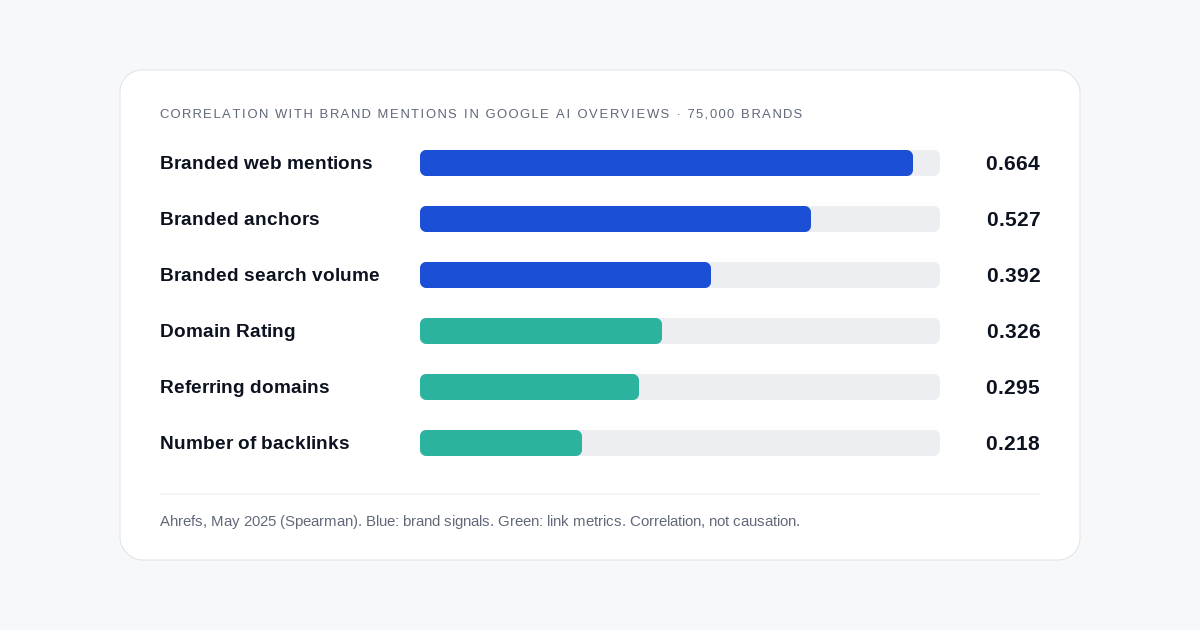
Backlinks vs LLM citations: what four studies show and how to compare the return
Backlinks go with AI visibility, but less than brand mentions, and the studies disagree on how much. What they found, why, and how to compare the ROI of a link with that of an AI citation.
Read the article →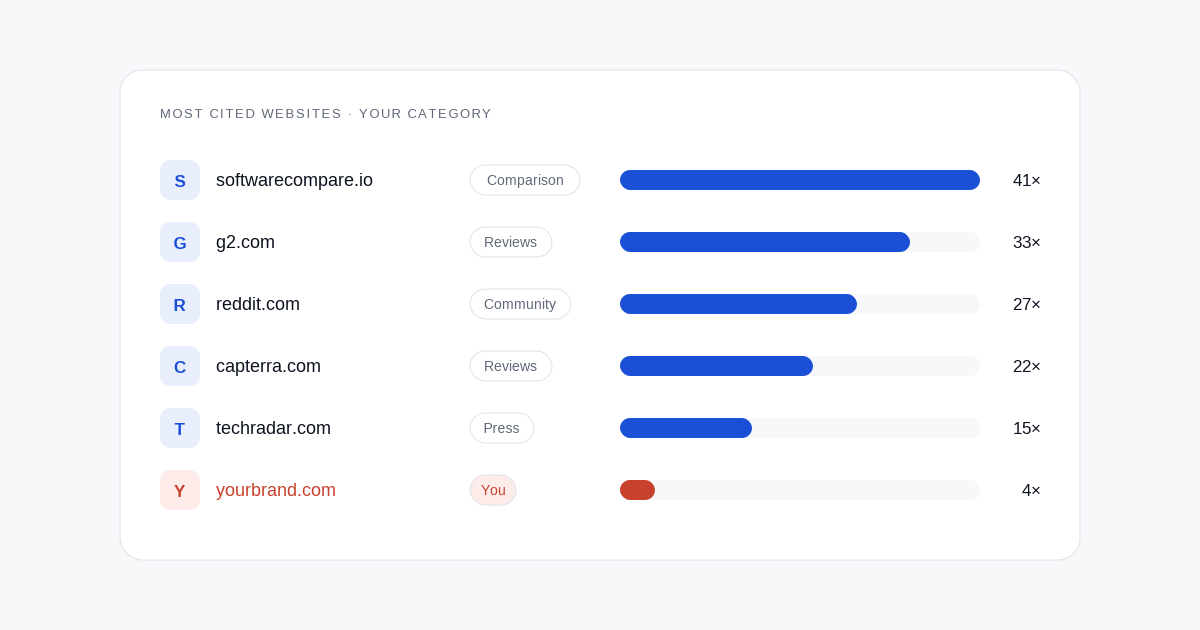
Which sources do AI assistants cite, and how to get your brand into them
When an assistant recommends a product, it is summarizing a comparison site, a review platform or a forum thread. Find those sources and get into them.
Read the article →