Backlinks vs LLM citations: what four studies show and how to compare the return
Digital PR teams are asked a new question: if a link earned this quarter does not show up in ChatGPT, was it worth it? Four studies tried to answer it in 2025, and they do not agree. Backlinks do go with AI visibility, but less than brand mentions do, and the size of the link effect depends on the engine and on what is measured. This guide sets the studies side by side, explains why they differ, and gives a framework to compare the return on a backlink with the return on an AI citation.
The short answer
- Links still matter, indirectly. Assistants that search the web read pages from search indexes, and links help a page rank, be crawled and be found. Studies find a positive correlation between link metrics and being named or cited.
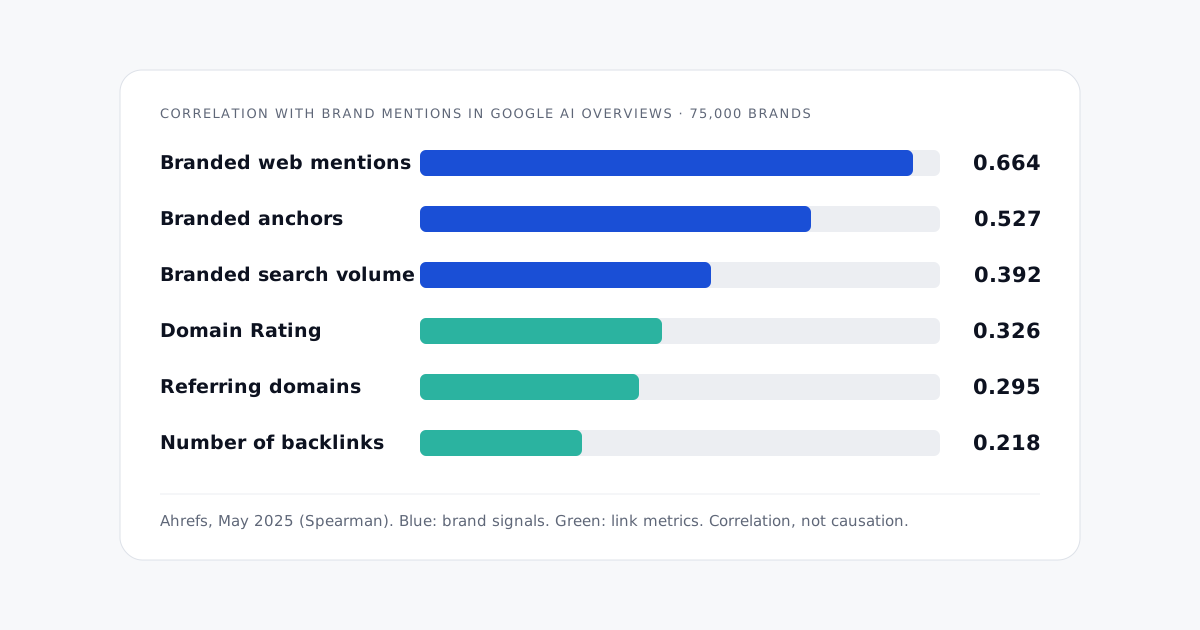
- Mentions matter more than links in the one large brand study. Ahrefs found branded web mentions correlating three times as strongly with Google AI Overviews visibility as the number of backlinks did.
- Authority scores are a weak guide on their own. They describe a domain, while assistants cite pages that answer a question. A specialist blog or a forum thread is often cited over a high-authority site that does not answer it.
- You need two ledgers. Count links with link metrics, and count their effect with citation and mention metrics on the questions your buyers ask. Neither replaces the other.
What the studies found
| Study | What it measured | What it found |
|---|---|---|
| Ahrefs, May 2025 | 75,000 brands, mentions in Google AI Overviews, Spearman correlations | Branded web mentions 0.664, branded anchors 0.527, branded search volume 0.392, Domain Rating 0.326, referring domains 0.295, number of backlinks 0.218 |
| Ahrefs, June 2025 | The 50 most mentioned sites in Google AI Overviews, ChatGPT and Perplexity, mention share against Ahrefs Rank | No clear relationship: -0.12 for AI Overviews, 0.01 for ChatGPT, -0.34 for Perplexity, none statistically significant. The author notes the sample is small and limited to heavily linked sites |
| Semrush, October 2025 | 1,000 domains across ChatGPT, ChatGPT with search, Gemini, Google AI Overviews and Perplexity | Authority Score correlates with AI mentions (Spearman 0.57) and, less, with AI share of voice (0.36). Nofollow and follow links correlate almost the same (0.51 and 0.50) |
| SE Ranking, November 2025 | 129,000 domains and 216,524 pages in 20 niches, ChatGPT citations | Referring domains were the strongest predictor: sites with up to 2,500 averaged 1.6 to 1.8 citations, sites with more than 350,000 averaged 8.4, with the steepest rise near 32,000 |
Two points stand out. Every one of these is a correlation, and the authors say so. And the vendors that ran them sell SEO or AI visibility tools, so read them as evidence to weigh, not as settled facts.
Why the studies disagree
- Different units. Ahrefs' first study looks at brands, SE Ranking at domains and pages, Semrush at domains. A brand can be named without its own site being cited, and a site can be cited without the brand being the answer.
- Different engines. Google AI Overviews, ChatGPT and Perplexity retrieve and cite differently. Semrush saw the link effect vary by platform.
- Range restriction. When a sample holds only the 50 most linked and cited sites, differences in links cannot show. The Ahrefs author says as much about the June study.
- A shared cause. Large, well-known brands earn links, mentions and citations because they are large and well known. Part of every link correlation is popularity, not links at work.
- Different metrics. A mention, a citation of a page and a recommendation are three different events, and the studies count different ones.
The consistent part is the direction: a site that is widely linked is more often cited, and a brand that is widely discussed is more often named. How much a new link adds to a given site is not something any of them measure.
What the assistants say themselves
We asked ChatGPT, Gemini and Google AI Mode two questions on this subject: whether traditional backlink authority scores are still useful metrics for AI chatbots, and what framework compares backlink ROI with citation frequency (48 answers each, 16 updates between October 9 and November 5, 2026). The three assistants gave the same verdict in different words: authority scores are still useful but no longer sufficient. Gemini called backlink authority an upstream infrastructure and trust signal; Google AI Mode said entity recognition and consensus across sources count for more than link votes.
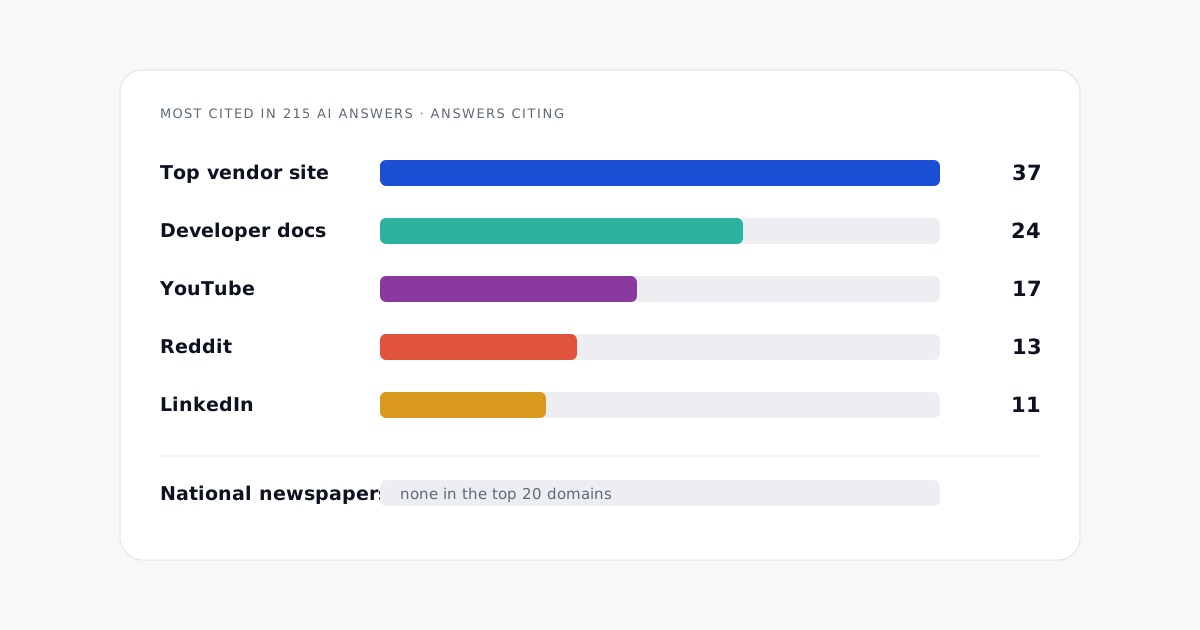
The pages they cite are telling. For the first question the most cited domains were a content marketing blog (15 answers), LinkedIn (12), Google's developer documentation (9), and AI visibility and SEO vendors' blogs. For the second, small AI visibility tool sites and a research paper repository. These are mostly marketing blogs and vendor sites, which is worth remembering when an answer states a figure: check it against the study it comes from, as in the table above. It also shows what gets a page cited here: it answers the question directly, in a form that is easy to quote.
How a link reaches an AI answer
No assistant publishes how it weighs links, so this is the reasoning that fits the evidence:
- Through retrieval. When an assistant searches the web, it reads pages that a search index returns. A link that helps the linked page, or the article carrying it, rank for the buyer's question, helps it be read. This is the route where a campaign can show results within weeks.
- Through mentions. A brand named on many pages is more likely to be named in an answer, with or without a link. In the Ahrefs study, branded anchor text (a link whose text is the brand name) correlated more strongly (0.527) than any link count, which suggests that the brand name on the page carries weight, not only the link.
- Through training. When a model answers from memory, it repeats what many sources said about a category over time. This is slow and cumulative.
Semrush found nofollow and follow links related to AI visibility about equally, so a nofollow placement on a site assistants read (a forum, a review platform) is not worthless for this purpose. What counts is that the page is read and cited.
Two ledgers: what to measure on each side
| Backlinks (SEO ledger) | AI citations (GEO ledger) | |
|---|---|---|
| What you count | New and lost referring domains, link relevance, anchor text | Answers that name your brand, answers that cite your site, citing domains |
| Quality signal | Authority of the linking site, topical fit | Whether the page is cited for your buyer questions, position in the answer, sentiment |
| Effect on business | Rankings, organic traffic, conversions | Share of voice against competitors, AI referral traffic, branded searches that follow |
| Speed | Weeks to months | Days to weeks for assistants that search the web; months for what models remember |
| Source of the data | A backlink index | The same questions asked repeatedly to each assistant |
A framework to compare the return
The two ledgers become comparable when each placement is tied to the questions it should change, and each question is tracked before and after.
- Pick the buyer questions. Take 30 to 50 questions that the campaign should move, from your prompt set, and track them on ChatGPT, Gemini and Google AI Mode in the markets you sell in.
- Take a baseline. Record the share of answers that name you, the share that cite your site, and the competitors named. Allow for noise: one answer proves nothing, so use several updates (see how to measure AI visibility).
- Tag every placement. For each link or mention, record its cost, the page it is on, whether that page was already cited for the tracked questions, and the date.
- Compare after the next updates. Look at the change in mention rate and citations on the tracked questions, and whether the answers now cite the pages you placed. That citation is the most direct proof that a placement works.
- Divide. Cost per link on the SEO side. On the AI side, cost per point of mention rate gained on the tracked questions, or cost per additional answer that cites you.
An example with made-up numbers, to show the arithmetic. A campaign of 6 placements costs $9,000. The SEO ledger shows 6 new referring domains, $1,500 each. The tracked set is 40 questions on three assistants, 120 answers per update, and the mention rate goes from 8% (10 answers) to 14% (17 answers) over three updates. That is 6 points for $9,000, $1,500 per point, or about $1,300 per extra answer that names you. If 4 of the 6 placements are on pages the answers now cite, the AI return is real; if none is cited, the placements may still have helped rankings, but not this channel.
Keep the two numbers side by side in reports. A placement can be cheap on one ledger and worthless on the other, which is exactly what a single authority score hides.
Which links to chase for AI answers
- Pages that are already cited. Rank your target sites by how many answers cite them for your questions, not by authority score. A comparison article cited in 20 answers is worth more than a high-authority site cited in none. See which sources AI assistants cite and our study of what they cite.
- Mentions that name you the way buyers do. Your brand and product names, spelled the same everywhere, in the anchor text and the sentence around it.
- Pages that answer the question. A link from a page that matches the buyer's question beats one from a general page on a bigger site.
- Places assistants read that give nofollow links. Forums, review platforms and video descriptions, with your role disclosed.
The tactics are covered in digital PR for AI visibility. For the wider comparison of the two disciplines, see GEO vs SEO.
Tools for the two ledgers
Link data comes from a backlink index such as Ahrefs or Semrush. The AI side needs a tool that asks your questions to each assistant on a schedule and records the pages each answer cites, not only whether your brand is named. Rempa does this (Rempa is our product): it lists the sites cited when competitors are named and you are not, turns them into recommendations, and compares the answers to each tracked question before and after the work. Peec AI, Otterly.AI, Profound and Semrush also track citations; see the best AI visibility tools in 2026 for prices and coverage, and SERP tracking vs AI citation tracking for how the two kinds of measurement differ.
Frequently asked questions
Do backlinks affect whether ChatGPT cites my site?
They are associated with it. In a study of 129,000 domains, sites with more referring domains were cited more often by ChatGPT. The studies are correlational, though, and popular sites tend to have both links and citations, so a single new link has an effect nobody has measured.
Are brand mentions more important than backlinks for AI visibility?
In Ahrefs' study of 75,000 brands, branded web mentions correlated with Google AI Overviews visibility at 0.664 against 0.218 for the number of backlinks. Other studies measure different things and find links matter more, so treat mentions and links as complementary.
Is Domain Rating or Authority Score still a useful metric for AI visibility?
It is a rough guide to a domain's standing, and it correlates with AI visibility in several studies. It does not tell you whether a page answers your buyer's question or is cited for it, so use it next to the number of answers that cite the site.
Do nofollow links count for AI answers?
In Semrush's study, nofollow and follow links related to AI visibility almost equally. Assistants read pages, and the nofollow attribute is a signal to search engines about ranking, not a barrier to being read.
How do I measure the ROI of a link building campaign on AI answers?
Track a fixed set of buyer questions before and after, and compare the share of answers that name you, the share that cite the pages you placed, and your share of voice against competitors. Divide the campaign cost by the change.
How long before a new link shows up in AI answers?
Assistants that search the web can pick up a new page within days or weeks if it is indexed and ranks for the question. What models remember changes over months. Judge the result on trends over several updates, not on one answer.
Sources
- Ahrefs, "An Analysis of AI Overview Brand Visibility Factors (75K Brands Studied)", May 26, 2025.
- Ahrefs, "Domain Link Metrics Are Not Good Predictors of AI Search Mentions", June 25, 2025.
- Semrush, "Do Backlinks Still Matter in AI Search? Insights from 1,000 Domains", October 16, 2025.
- SE Ranking, ChatGPT citation factors study (129,000 domains, 216,524 pages, 20 niches), November 24, 2025.
- Rempa tracking: two buyer questions on backlink metrics and citation ROI asked to ChatGPT, Gemini and Google AI Mode, 16 updates, October 9 to November 5, 2026.
More from the blog
Digital PR for AI visibility: how to get your brand cited in ChatGPT, Gemini and Perplexity
Assistants cite a different set of sites than the ones PR teams pitch. How coverage reaches AI answers, which tactics get your brand cited, and how to measure a campaign on AI mentions.
Read the article →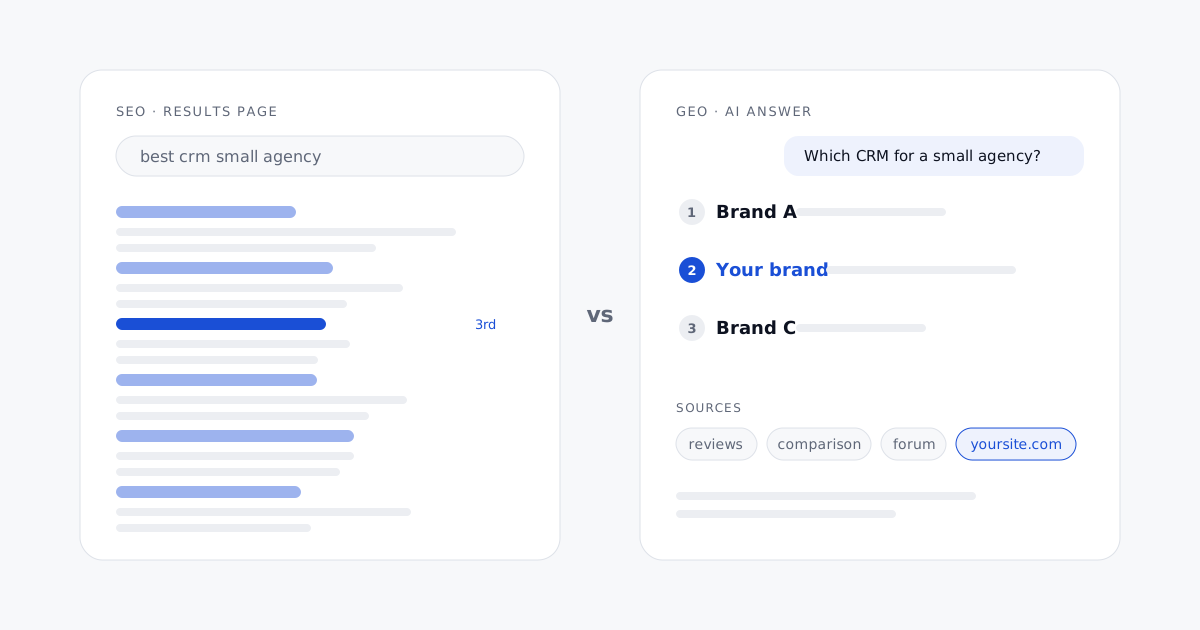
GEO vs SEO: how Generative Engine Optimization differs from traditional search tactics
SEO earns a place in the list; GEO earns a place in the answer. Where the two overlap, where they part ways, and how to run both without doubling the work.
Read the article →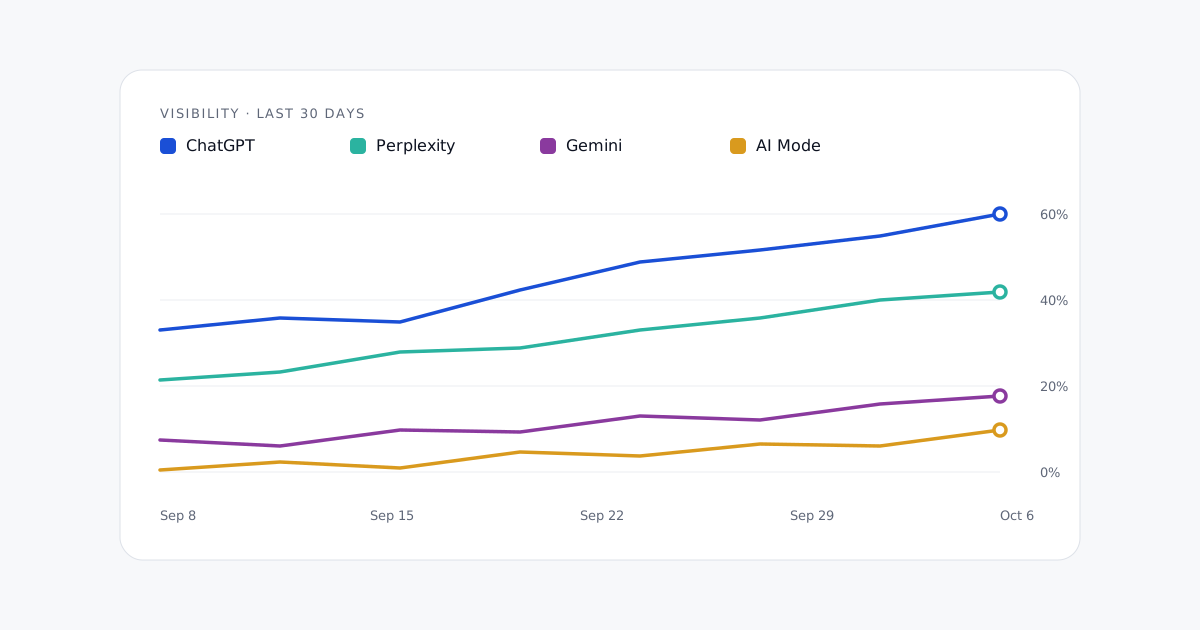
How to measure your brand's visibility in ChatGPT, Gemini and Perplexity
"Are we in ChatGPT's answers?" deserves better than a screenshot. The setup, the five metrics and the habits that turn them into decisions.
Read the article →