Which sources do AI assistants cite, and how to get your brand into them
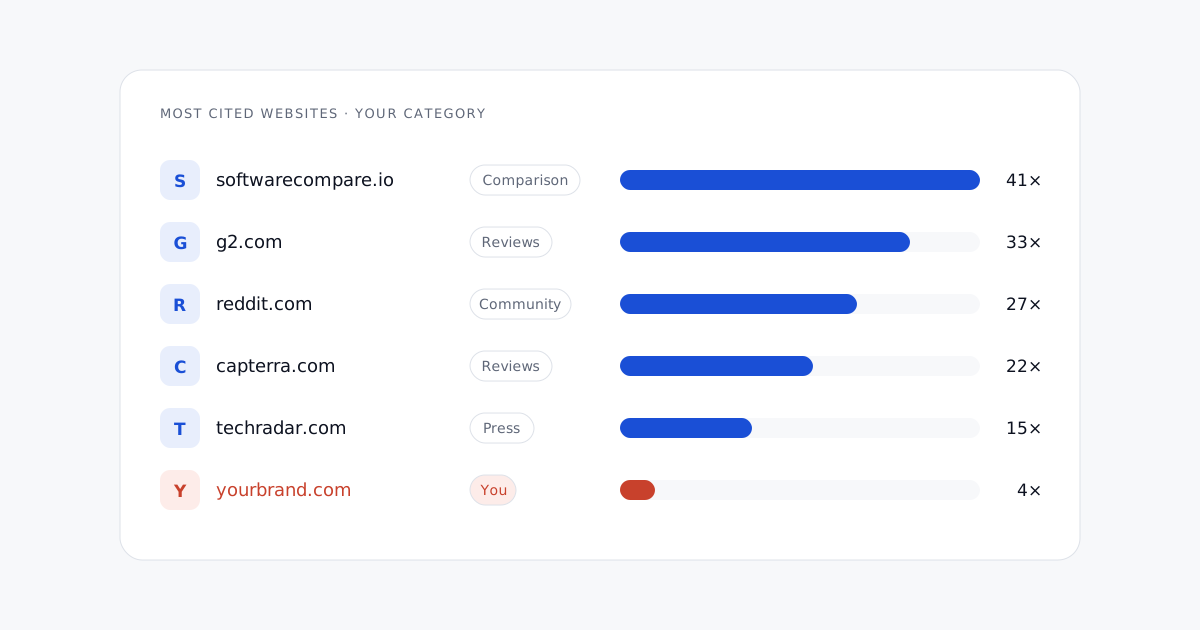
When an AI assistant recommends a product, it is rarely quoting the product's own website. It is summarizing what a comparison site, a review platform, a forum thread or a trade article said. Those sources decide whether you are named and how you are described. Here is how to find them and get into them.
How an answer is built
Modern assistants answer most product and recommendation questions by searching the web first. They retrieve a handful of pages, read them, and write a synthesis, often with citations. The model's training data sets the background, but for "what is the best…" and "which tool for…" questions, the retrieved pages carry most of the weight. The consequence is simple: your presence in AI answers depends on the pages the engines retrieve for your category, and on what those pages say about you.
Each engine has its own habits. Perplexity cites generously and leans on recent, well-structured pages. ChatGPT with search cites fewer sources and seems to favor established publishers and large platforms. Google's AI Overviews and AI Mode draw on Google's index and rank, so classic SEO strength still counts there. Gemini sits in between. You will only know what your category looks like by measuring it.
The sources that keep coming back
Across categories, the same families of sources dominate AI citations:
- Comparison and "best of" pages on software directories, affiliate sites and niche media. "Top 10 X tools in 2026" pages are built to be retrieved, and they are.
- Review platforms such as G2, Capterra, Trustpilot or their equivalents in your industry. Ratings and review counts are easy facts for a model to repeat.
- Community threads: Reddit, Stack Overflow, specialist forums, LinkedIn discussions. Engines treat them as candid opinion and quote them often.
- Reference and knowledge pages: Wikipedia, industry glossaries, analyst reports, which set the vocabulary of the category.
- Trade press and publishers, especially for "news" or "trend" phrasings.
- Your own site and your competitors' sites, mostly for facts about a specific product once it is already in the shortlist: pricing, features, integrations.
Note where your own site appears in that list: late, and for confirmation rather than discovery. Getting discovered happens elsewhere.
Finding the sources that matter for you
Measure, don't guess. Run your prompt set across the engines, collect every citation, and count citations by domain. Two lists come out of it:
- The most cited domains in your category. These are the pages the engines trust for your kind of question. If you are not on them, you are relying on luck.
- The domains cited in answers that name your competitors but not you. This is the sharper list: the exact places where the engine learned about them and not about you.
Then open the pages. For each, note whether you are present, how you are described, and whether the facts are current. A surprising share of the "we are not in AI answers" problem is a comparison page that lists you with a three-year-old price, or a review profile with twelve reviews next to a competitor's four hundred.
Getting into the sources
Comparison and listicle pages
Most are maintained by a person who can be contacted. Ask to be added or updated, with the facts ready: a one-paragraph description in plain words, pricing, who the product is for, three differentiators, a logo. Make it easy to say yes. Where the page is affiliate-driven, a partner program helps.
Review platforms
Claim your profile, keep it accurate, and run a steady review program with real customers. Volume and recency both matter to the engines, because they matter to the platforms' own rankings.
Communities
Do not astroturf; models read fluent marketing in a forum the way people do. Answer questions where you genuinely have something useful to say, disclose who you are, and let customers speak. A single detailed, honest thread about your product can be cited for years.
Your own site
Write the pages that answer the prompts directly: "X vs Y", "X for [industry]", "X pricing", with specific, verifiable facts and plain structure (clear headings, short paragraphs, tables where they help). Keep facts consistent across every page and every third-party listing. Assistants cross-check; contradictions make them hedge or drop you.
Press and analysts
Slower and more expensive, but a credible article or report is cited for a long time, especially for "trend" and "market" prompts.
Keeping watch
Source lists move. A new listicle can appear and take half of a category's citations within weeks; a review platform can change its page structure and lose them. Track the most cited domains over time, flag new entrants, and re-check your presence on the top ones every month. Rempa's Sources page does this automatically, with a click from any domain to the answers that cite it; the method works just as well with a spreadsheet, if you have the patience.
The one-line version
AI assistants recommend what their sources recommend. Find the sources, be present and accurate on them, and the answers follow.
More from the blog
How to build an enterprise GEO strategy: a framework for organic search directors
GEO at enterprise scale is a program, not a list of tactics: the questions to win, a baseline, four workstreams with owners, and the tools to measure it.
Read the article →
How agencies report AI visibility to clients: share of voice, citations and a monthly report template
"What does ChatGPT say about us?" deserves a better answer than a screenshot. The metrics, setup and monthly report template agencies use for AI visibility.
Read the article →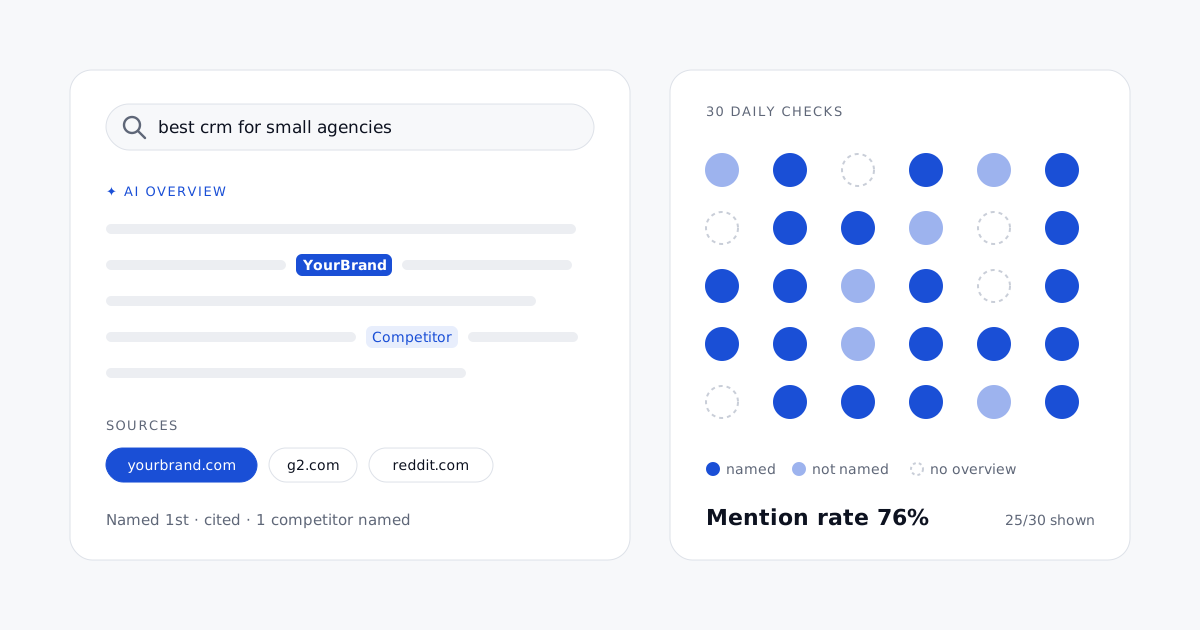
How to track AI Overviews: monitoring brand citations in Google's AI answers, with tool pricing
Search Console will not tell you whether Google's AI summaries name your brand. How to track AI Overviews every day, and what each tool really costs per daily check.
Read the article →