Digital PR for AI visibility: how to get your brand cited in ChatGPT, Gemini and Perplexity
Digital PR used to be judged on links and reach. AI assistants add a new question: when a buyer asks ChatGPT, Gemini or Perplexity which vendor to choose, does the coverage you earned end up in the answer? Often it does not, because assistants cite a different set of sites than the ones PR teams pitch. This guide explains how earned media reaches AI answers, how to find the publications and pages assistants actually cite in your category, which tactics get your brand into them, and how to measure the effect of a campaign on AI mentions and citations.
How coverage reaches AI answers
An article about your brand can shape AI answers in two ways:
- Through search. ChatGPT search, Perplexity, Copilot, Gemini and Google's AI Overviews and AI Mode look up pages when they answer, and summarize what they find. If they read and cite the article that names you, your brand is in the answer within days or weeks of publication. For this route, what matters is whether the page ranks and is chosen for the buyer's question, in the search index each assistant uses.
- Through training. When an assistant answers from memory, it repeats what many sources said over time. A brand named consistently across many trusted publications becomes part of what the model "knows" about a category. This route is slow and cumulative: one article changes little; a year of coverage does.
The first route is where a PR campaign can show results this quarter, and where it can be measured. It also explains why placements and AI visibility often do not move together: a story in a national newspaper is valuable for reputation, but assistants may not cite it for "best [category] software" questions at all.
What assistants actually cite: an example
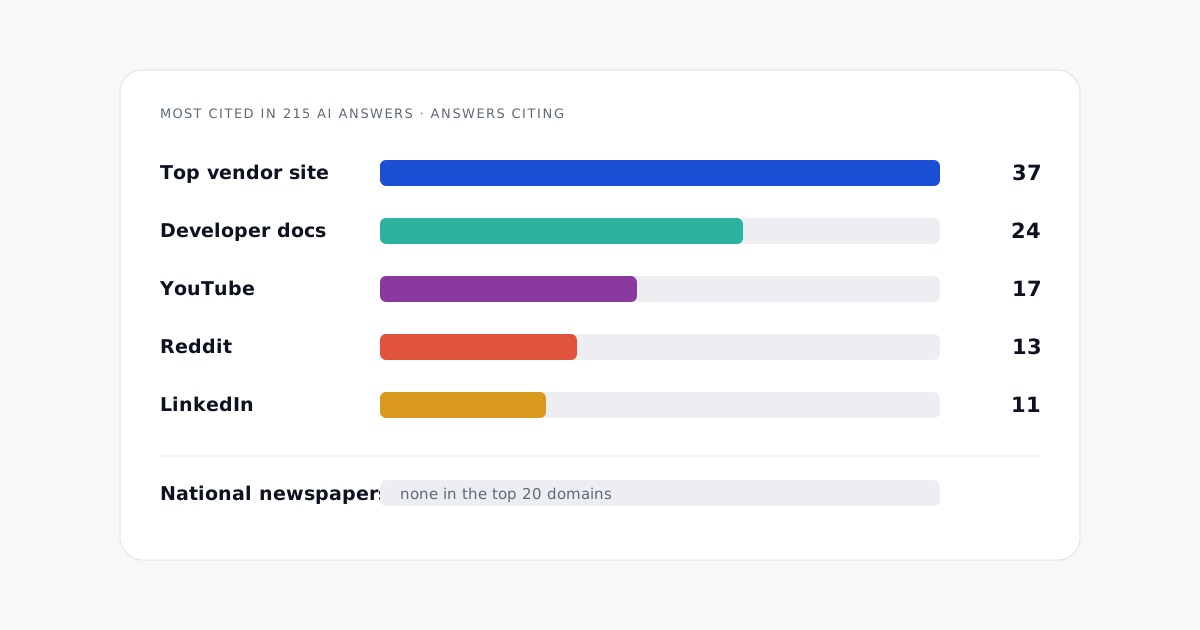
In our own tracking of 72 buyer questions about AI visibility software, asked to ChatGPT, Gemini and Google AI Mode (215 answers, October 2026), the most cited domains were the vendors' own websites (the top two cited in 37 answers each), Google's developer documentation (24), YouTube (17), Reddit (13) and LinkedIn (11). No national newspaper appeared among the 20 most cited domains. Every category has its own map, and it rarely matches a media list: drawing yours is the first step.
1. Audit the sources AI cites in your category
Run the questions your buyers ask (comparisons, "best tool for", "alternatives to", pricing questions) on the assistants they use, in each market, and record every page each answer cites. Then:
- Rank the domains by the number of answers that cite them, overall and by assistant: ChatGPT, Gemini and Perplexity often lean on different sites.
- Classify them: editorial (trade and national press), review platforms, comparison and "best of" articles, forums and communities, video, reference sites, vendors.
- Mark the gaps: pages that are cited, name your competitors and do not name you. Those are your PR targets, ranked by how often they are cited.
The same audit answers a common question from leadership: which publications and review sites the assistants cite when they recommend your competitors. See also which sources AI assistants cite.
2. The tactics that get a brand cited
| Tactic | Why it works for AI answers | Where it fits |
|---|---|---|
| Get added to the cited comparison articles | Assistants answer "best X" questions from these lists; one update adds you to every answer that cites the page | Any category: contact the author with a short facts sheet and what makes you different |
| Original research with numbers | Assistants quote figures with their source; a study that others cite becomes a reference | Brands with data to share, published as a web page, not only a PDF |
| Expert comment in trade press | Trade publications are often cited for professional questions where national press is not | B2B and specialist categories |
| Reviews on the cited review platforms | Recommendations and tone often come from review sites | Software, services, consumer products |
| Honest presence in communities | Forum threads and videos are cited for "is X worth it" and "X vs Y" questions | Where real users discuss your category; disclose who you are |
| Tier-one national coverage | Builds reputation and the long-term "training" route; cited directly when the question is about news or the company itself | Announcements, funding, leadership, company news |
Placements on the pages assistants already cite move answers fastest. New coverage elsewhere helps if it ranks for the buyer's questions, and adds up over time for the training route.
3. Make your PR content usable as a reference
Assistants use a page as a source when they can take a clear, attributable fact from it. For studies, reports and announcements:
- State the finding first, in one sentence with the number and the date, before the context.
- Publish it as a web page on your site, with headings, tables and the method, and link the PDF from it. Text inside a PDF or an image is harder to read and cite.
- Name things consistently: the study, your company and your product under the same names everywhere, so assistants connect the coverage to you.
- Give journalists the citable lines: the three facts you want repeated, with the link to the study page.
- Keep it current: date the page, update the figures each year, and say so.
4. Measure the effect on AI answers
Tie each campaign to the buyer questions it should change, track those questions on the assistants that matter, and compare before and after:
- Mention rate: the share of answers that name your brand.
- Citations of the coverage: whether the answers cite the articles you placed, or your study page. This is the most direct proof that a placement works.
- Citing domains: how many different sites cite you or name you in the answers.
- Tone: the sentiment of the answers that name you (see how to track brand sentiment in AI answers).
- Share of voice against the competitors named in the same answers.
Allow a few weeks for assistants that search the web to pick up new coverage, and read the trend over several updates: one answer proves nothing. Report it next to the classic PR metrics, not instead of them.
Do editorial backlinks still matter?
Yes, but indirectly. Assistants that search the web rely on search indexes, such as Google's for AI Overviews and AI Mode, and largely Bing's for ChatGPT search, so links that help a page rank for a buyer's question also help it be read and cited. Judge an earned link by what it does for AI answers: does the linked page, or the article that carries the link, get cited for the questions you track? Domain authority alone is a weak guide: assistants often cite a specialist blog or a forum thread over a high-authority site that does not answer the question.
Tools to track AI citations for PR
PR teams need a tool that records the pages each AI answer cites, not only whether the brand is mentioned. AI visibility tools do this:
- Rempa records the pages cited in every answer, ranks the most cited domains for your questions, and recommends the websites where competitors are cited and you are not, by assistant and market. Rempa is our product.
- Peec AI offers gap analysis by source and citation share; Otterly.AI, Profound and Semrush also track the sources cited in AI answers.
See the best AI visibility tools in 2026 for prices and coverage, and how agencies report AI visibility to clients.
Frequently asked questions
Does digital PR improve visibility in ChatGPT and Perplexity?
Yes, when the coverage lands on pages that those assistants read and cite for your buyers' questions. Placements on sites they never cite for those questions help your reputation, but rarely change the answers in the short term.
How do I find which publications AI assistants cite in my sector?
Ask the assistants the questions your buyers ask, in each market, and record the pages each answer cites. Rank the domains by how often they are cited, and note those that name your competitors and not you. An AI visibility tool does this every day.
Is tier-one national coverage worth it for AI visibility?
It builds reputation and, over time, what models know about your brand, and it is cited for questions about news and the company itself. For "best tool" and comparison questions, assistants more often cite trade press, review sites, comparison articles and communities.
How do I measure the impact of a PR campaign on AI answers?
Track the buyer questions the campaign targets before and after, and compare the share of answers that name you, whether they cite the articles you placed, the number of citing domains, the tone, and your share of voice against competitors.
How do I get my company cited as a source in Perplexity answers?
Publish pages that answer specific questions with clear facts and numbers, make sure they rank in search, and earn mentions on the pages Perplexity already cites for your questions. Then check which of your pages it cites, and for which questions.
More from the blog
Structured data and content structure for AI citations: what helps assistants use your pages
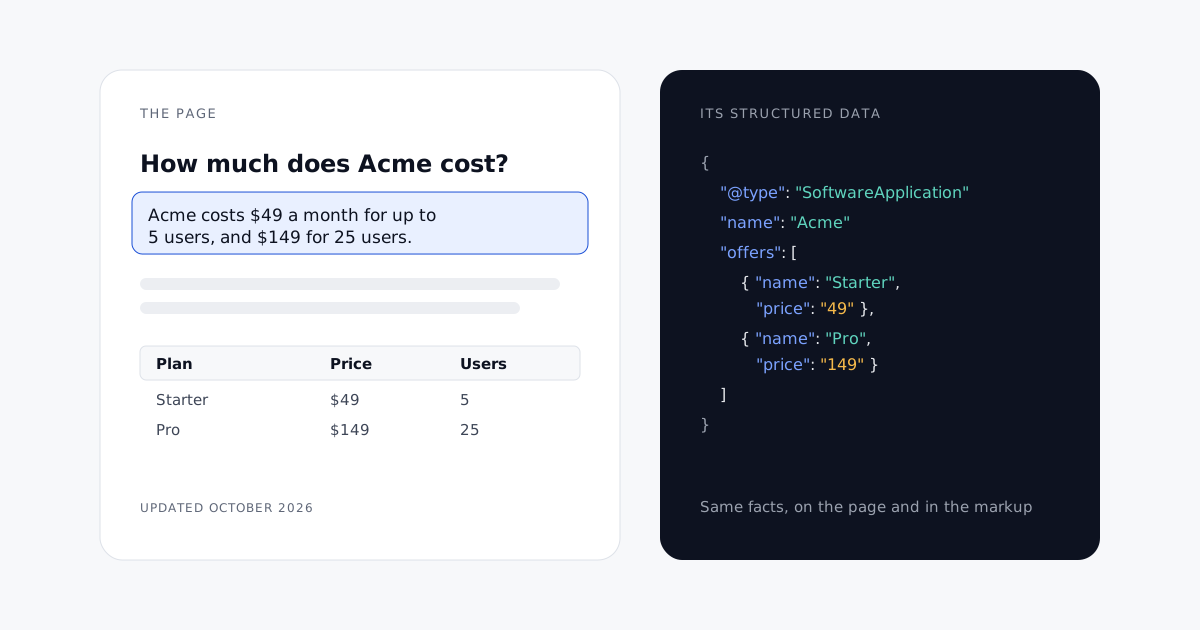
Schema markup helps less than many guides promise; the page itself decides whether an assistant can quote it. Which structured data matters, and how to write pages AI answers cite.
Read the article →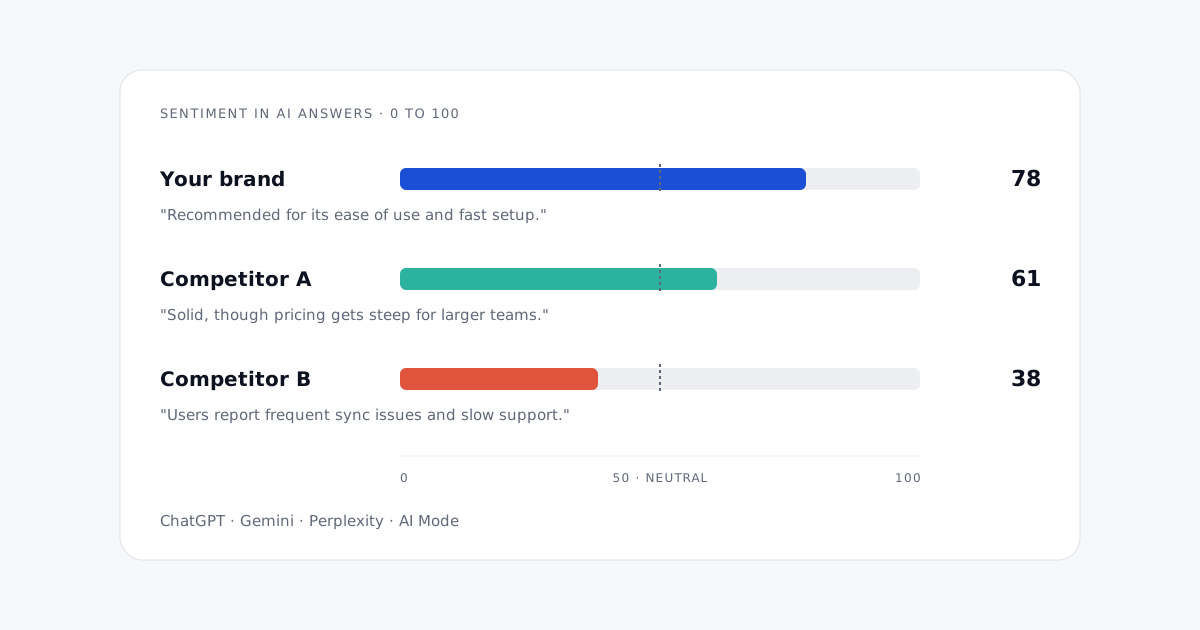
How to track brand sentiment and reputation in AI answers
AI answers have a tone, and buyers read it before your reviews. What to measure, how to check that sentiment scores are right, how to audit your leadership, and what changes the tone.
Read the article →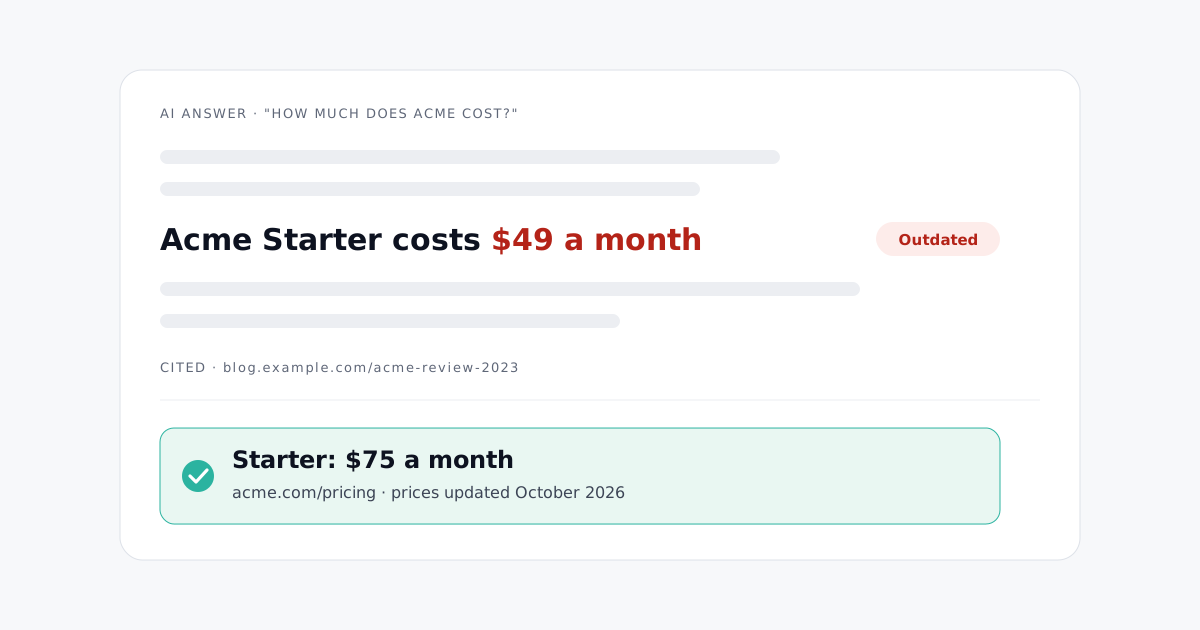
How to fix AI hallucinations about your brand: find the wrong facts, trace them, correct them
Wrong prices, invented features, a CEO who left years ago: AI assistants get brand facts wrong more often than most companies check. How to find the errors and fix them where they come from.
Read the article →