How to fix AI hallucinations about your brand: find the wrong facts, trace them, correct them
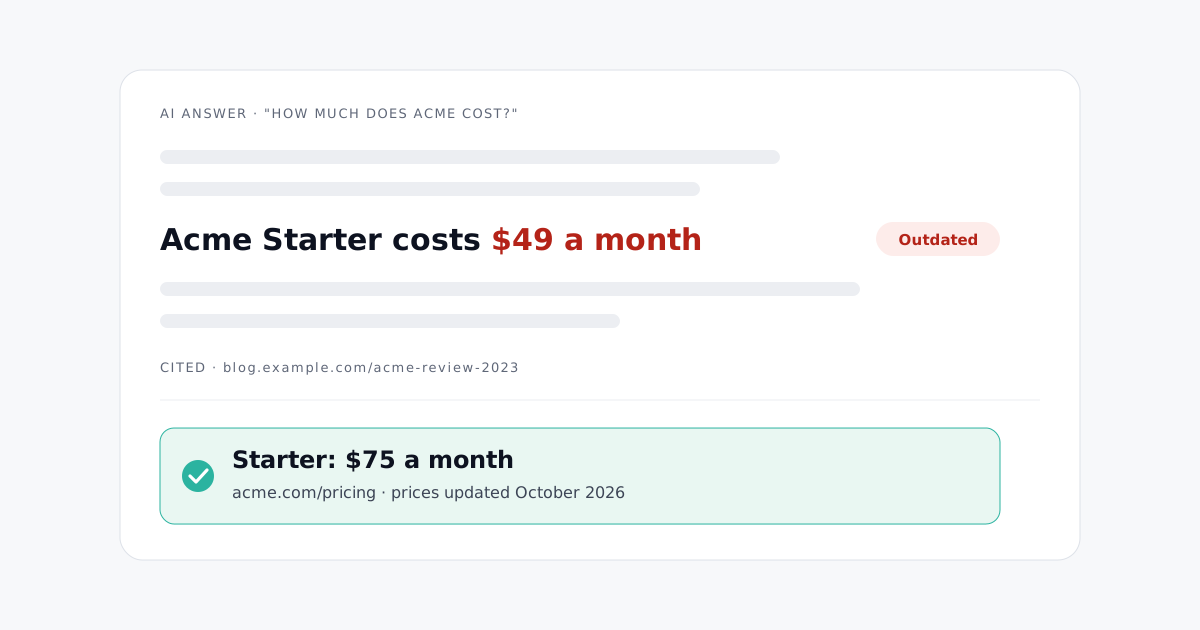
ChatGPT quotes last year's price. Gemini credits you with a feature you never built. Copilot names a CEO who left in 2023. AI assistants get brand facts wrong more often than most companies check, and buyers read those answers before they ever reach your website. This guide explains why AI answer engines produce wrong facts about a brand, and a five-step method to find them, trace each one to its source, correct it where it comes from, and check that the answers changed.
Why AI assistants get your brand wrong
A "hallucination" about a brand is rarely random. Almost every wrong fact has one of four causes, and each one calls for a different fix:
- An outdated page. Assistants that search the web (ChatGPT search, Perplexity, Gemini, Copilot, Google AI Overviews and AI Mode) summarize the pages they find. If an old pricing page, a 2023 press release or a comparison article written before your relaunch ranks well, its facts become the answer.
- A third-party page that is wrong. Review sites, software directories, listicles and forums describe you in their own words. An error on a page that assistants trust spreads to every answer that cites it.
- Old training data. When an assistant answers from memory instead of searching, it repeats what was true when the model was trained. This is the slowest error to fix: it lasts until the next model.
- A gap. When no page states a fact clearly, such as whether you have a free plan, which countries you serve or which tools you integrate with, the model fills the gap with what is typical for your category. That is how non-existent features appear.
The first, second and fourth causes are in your hands within weeks. The third improves as the corrected pages spread, and as assistants rely more on search.
A five-step method to fix wrong facts in AI answers
1. Write down the facts that must be right
Before looking for errors, list the facts a buyer could act on, with the page where each one is stated: plans and prices, what each plan includes, main features and what you do not do, integrations, markets and languages, security and compliance, company facts (founding year, headquarters, leadership). Keep it short: twenty to forty facts. This sheet is what every answer is checked against, and what you will hand to third-party sites.
2. Find the errors, in the questions buyers ask
Asking "What is [your brand]?" finds only part of the problems. Wrong facts mostly appear in the questions buyers really ask: "How much does [category] software cost?", "Which [category] tools integrate with Salesforce?", "Is [your brand] suitable for enterprises?", "[your brand] vs [competitor]". Build a set of 30 to 100 of them (see writing the prompts your customers ask) and run them:
- On every assistant your buyers use, since each one gets different facts wrong.
- In every market you sell in, from that country and in its language: prices and availability are often wrong in one market only.
- Several times: an error that appears in one answer out of five is still read by one buyer out of five.
Record, for each answer, every claim about your brand and the pages it cites. An AI visibility tool does this every day and keeps the answers, so you can read what each assistant said and when (see how to measure AI visibility).
3. Trace each error to its source
For each wrong claim, find where it comes from before trying to fix it:
| What you see | Likely source | Where to look |
|---|---|---|
| The answer cites a page with the wrong fact | That page | Open the citations, on your site and others |
| The wrong fact appears with no citation | Training data, or a page the assistant read without citing it | Search the exact wrong figure or wording on the web; check old versions of your own pages |
| Each assistant gives a different wrong answer | A gap: no page states the fact clearly | Your own site: is the fact written anywhere, in plain words? |
| The error appears in one market only | A local page, distributor or directory | Search results in that country and language |
Expect a handful of pages to explain most errors. On a typical brand, one outdated pricing page and two or three directory listings account for most of the wrong prices.
4. Correct the facts where they come from
On your own site, make each fact impossible to miss:
- One page per important fact, with the fact in the text, not only in an image or a script: a pricing page with every plan and what it includes, a features page that also says what you do not do, a page of company facts.
- Update or redirect the old pages that still rank: past pricing pages, discontinued products, old announcements.
- Add structured data (Organization, and Product or SoftwareApplication with offers) that repeats the same facts, and keep it in sync with the page.
- Date your pages ("Prices updated October 2026") so assistants can tell current from old.
On third-party sites, correct the pages assistants actually cite, starting with those cited most often: update your profiles on review sites and software directories yourself; ask the authors of comparison articles to update their entry, with your facts sheet attached; and for encyclopedic pages such as Wikipedia, propose corrections through the page's talk page with sources rather than editing your own article. When the change is news, a launch or a new price, announce it: fresh coverage replaces the old facts in search results.
To the assistants themselves, use the feedback buttons on wrong answers. It does not correct the answer for others the next day, but it flags the error to the provider.
5. Check that the answers changed
Run the same questions again, on the same assistants and markets, and read the claims, not just whether you are mentioned. Assistants that search the web usually pick up a corrected page within days to a few weeks after it is crawled. Facts from training data change more slowly, as models are updated and lean more on search. Keep the questions in your regular tracking: errors come back when a competitor's article or an old page starts ranking again.
Tools to detect wrong facts about your brand
Most AI visibility tools keep the full answers and their sources, which is what you need to find and trace errors. They differ on how much of the checking they do for you:
- Rempa keeps every answer with its cited pages, across the assistants and markets you choose, and sums up after each update how AI describes your brand: its strengths, its weaknesses and the words associated with it. You compare the claims with your facts sheet. Rempa is our product.
- Peec AI and Profound include fact-checking features that compare answers with facts you set.
See our comparison of the best AI visibility tools in 2026 for prices and coverage. Whatever the tool, the fixes themselves happen on your pages and on the sites that describe you.
What an AI accuracy audit costs
Done in-house, an audit is mostly time: a day to write the facts sheet and the questions, a day or two to read the answers and trace the errors, then the corrections. The tracking itself costs the price of an AI visibility tool for the period, from $75 a month on Rempa for 50 questions. Keeping the same questions tracked afterwards is what turns a one-off audit into protection: you see a new error the week it appears, not when a buyer quotes it back to your sales team.
Frequently asked questions
Why does ChatGPT give wrong information about my company?
Usually because it summarizes an outdated or wrong page it found on the web, repeats facts from its training data, or fills a gap where no page states the fact clearly. Find the pages it cites and the gaps on your own site first: those are the causes you can fix within weeks.
How do I correct wrong prices in AI answers?
Publish every plan and price as text on one current pricing page, add Offer structured data, redirect or update old pricing pages, then update the prices on the review sites and directories that assistants cite. Check the same pricing questions again over the following weeks.
Can I ask OpenAI or Google to correct an answer about my brand?
You can flag a wrong answer with the feedback buttons in ChatGPT, Gemini, Copilot and Google's AI features, but that does not change answers for others right away. The reliable fix is to correct the pages the assistants read.
How long does it take for AI answers to change?
For assistants that search the web, often days to a few weeks after the corrected page is crawled. For facts from training data, it can take until the next model update.
How do I know when an AI assistant starts saying something wrong?
Track the questions your buyers ask on the assistants they use, every day or every few days, and read the claims in the answers. An AI visibility tool keeps the answers and their sources, so you can see when a claim changes and which page caused it.
More from the blog
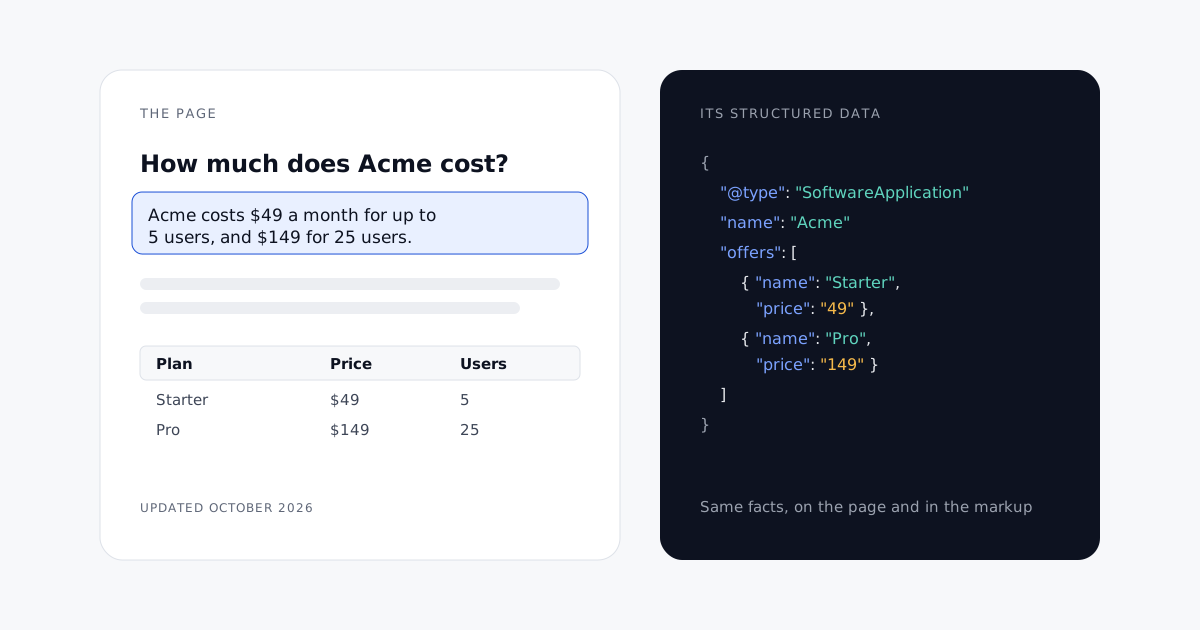
Structured data and content structure for AI citations: what helps assistants use your pages
Schema markup helps less than many guides promise; the page itself decides whether an assistant can quote it. Which structured data matters, and how to write pages AI answers cite.
Read the article →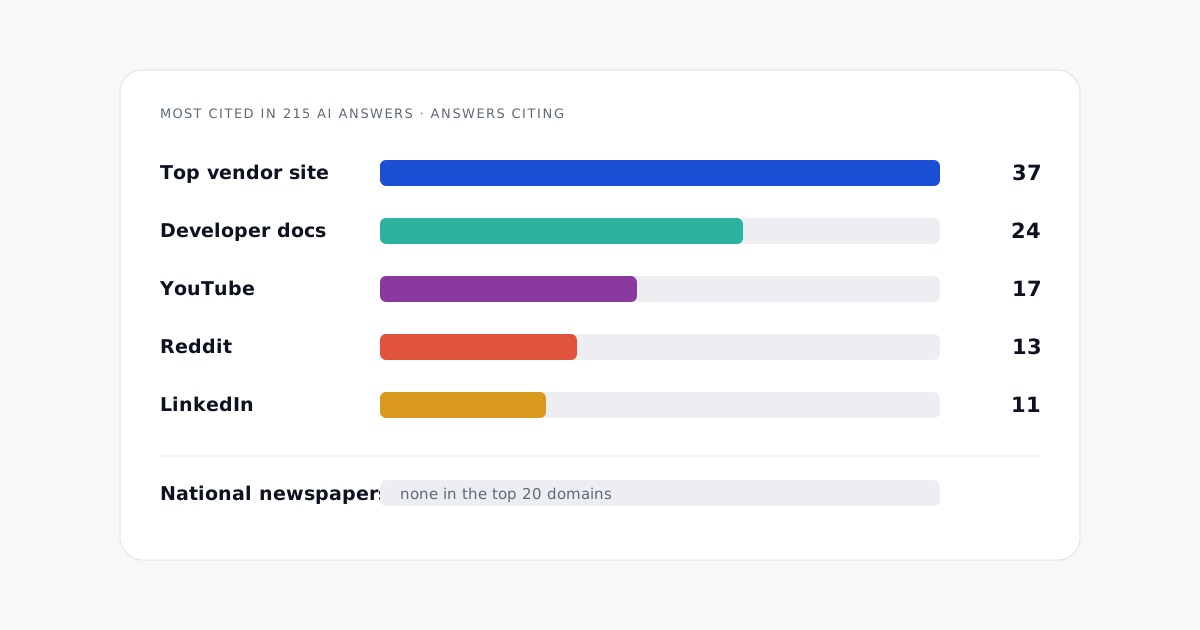
Digital PR for AI visibility: how to get your brand cited in ChatGPT, Gemini and Perplexity
Assistants cite a different set of sites than the ones PR teams pitch. How coverage reaches AI answers, which tactics get your brand cited, and how to measure a campaign on AI mentions.
Read the article →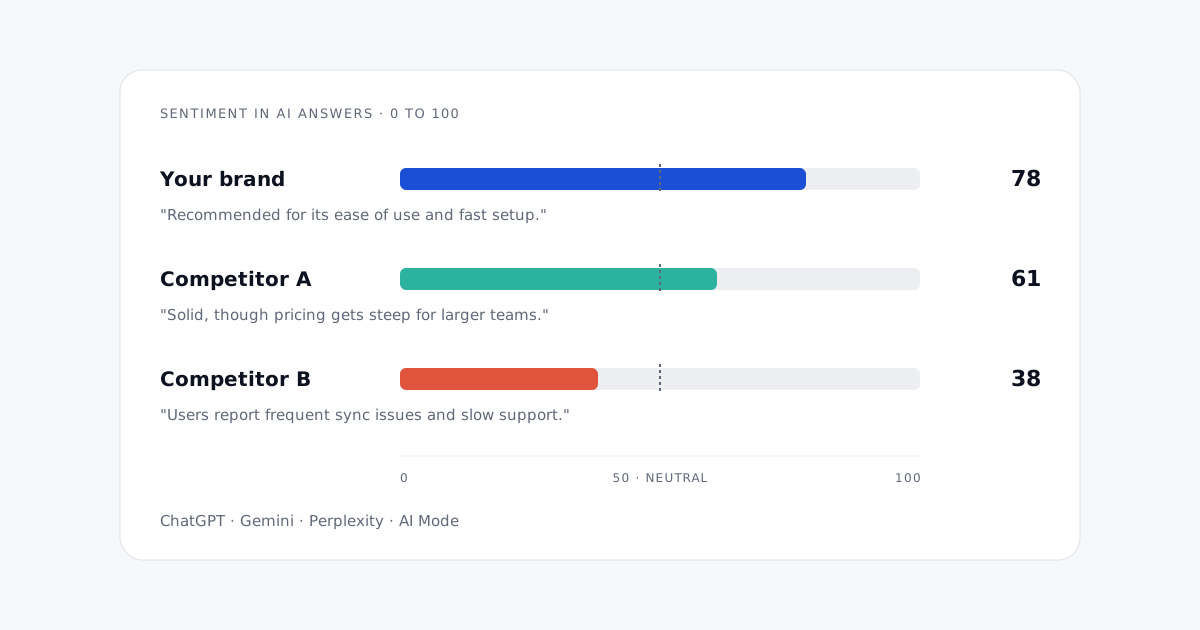
How to track brand sentiment and reputation in AI answers
AI answers have a tone, and buyers read it before your reviews. What to measure, how to check that sentiment scores are right, how to audit your leadership, and what changes the tone.
Read the article →