Structured data and content structure for AI citations: what helps assistants use your pages
Does schema markup get your brand into ChatGPT's answers? Partly, and less than many guides promise. AI assistants cite pages they can read, understand and trust to answer a precise question. Structured data helps search engines understand who you are and what you sell; the way the page itself is written decides whether an assistant can take a fact from it. This guide covers both: what structured data does for AI search, which types matter for a B2B software company, and how to structure pages and articles so AI answers use them.
What structured data does for AI search, and what it does not
Structured data (schema.org markup, usually as JSON-LD in the page) describes the page in a form machines read without guessing: this is an organization, this is a software product, this is its price, this article was updated on this date.
- It helps search engines understand entities. Your company, its products, their prices and the people behind them become facts with a clear type, linked to each other. Assistants that search the web rely on those search engines to find and rank pages, so clarity there helps you be found for the right questions.
- It is not required for AI features. Google states that there is no special markup to appear in AI Overviews or AI Mode: the usual rules for being indexed and shown in search apply.
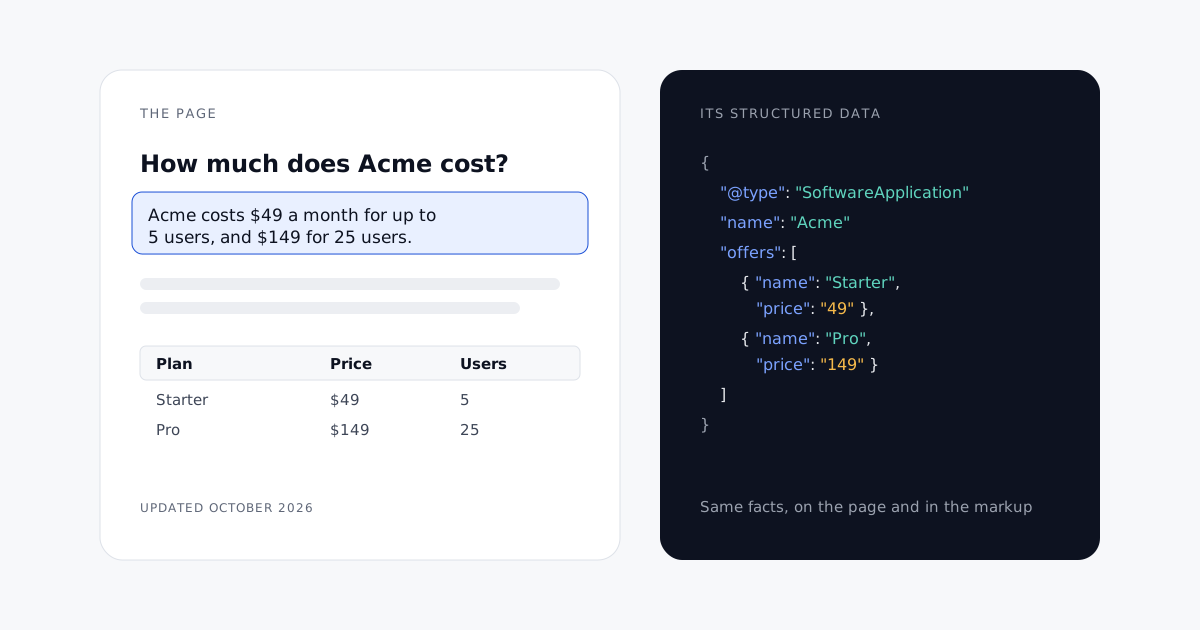
- It does not replace the text. When an assistant reads a page to answer, it works mostly from the visible content. A price that exists only in JSON-LD, or a feature list that appears only in markup, is easy to miss. Every fact in your structured data should also be written on the page, and say the same thing.
So: add structured data because it removes ambiguity about who you are and what you offer, keep it accurate, and spend most of the effort on the page itself.
The schema types that matter for a B2B software company
| Type | Where | What to include |
|---|---|---|
| Organization | Home page | Name, URL, logo, description, your official profiles (sameAs), contact point |
| SoftwareApplication or Product, with Offer | Product and pricing pages | Name, category, operating system ("Web"), each plan as an offer with price, currency and billing period |
| Article or BlogPosting | Articles, guides, studies | Headline, author or publisher, datePublished and dateModified |
| FAQPage | Pages with a real question-and-answer section | The questions and answers exactly as shown on the page |
| Person | Leadership or author pages | Name, job title, the organization (worksFor), official profiles |
| BreadcrumbList | Every page below the home page | The path from the home page, matching the visible breadcrumb |
A minimal product markup with its plans looks like this:
{
  "@context": "https://schema.org",
  "@type": "SoftwareApplication",
  "name": "Acme Analytics",
  "applicationCategory": "BusinessApplication",
  "operatingSystem": "Web",
  "publisher": { "@type": "Organization", "name": "Acme", "url": "https://acme.com/" },
  "offers": [
    { "@type": "Offer", "name": "Starter", "price": "49", "priceCurrency": "USD" },
    { "@type": "Offer", "name": "Pro", "price": "149", "priceCurrency": "USD" }
  ]
}
Two rules keep it useful: the markup must describe what the page shows, and it must change when the page changes. Outdated prices in structured data are one of the sources of wrong prices in AI answers (see how to fix AI hallucinations about your brand).
How to structure pages so AI answers use them
Assistants pick passages that answer the question asked, and cite the page they came from. Pages that are easy to quote share the same traits:
- The answer first. Open each page, and each section, with a sentence that answers the question directly, then explain. "Acme costs $49 a month for up to 5 users" is quotable; three paragraphs of context before the price are not.
- One question per heading. Write headings the way buyers ask ("How much does Acme cost?", "Does Acme integrate with Salesforce?"), each followed by its answer.
- Specific facts. Numbers, names, dates, limits and conditions. Vague claims ("powerful", "flexible") give an assistant nothing to repeat.
- Tables for comparisons. Plans, features, alternatives: a table makes each fact a clear pair, easy to extract.
- Self-contained sections. A passage may be read without the rest of the page: name the product in it rather than writing "it".
- Dates and sources. "Updated October 2026", and where the figures come from. Assistants favor what looks current and attributable.
- The same names everywhere. One name for your company and each product, on your site and elsewhere, so every mention is connected to you.
The pages that get cited most
- A pricing page with every plan in text: assistants answer "how much does it cost" questions from it, or from someone else's guess.
- Comparison pages ("[your product] vs [competitor]", "best [category] tools") that are honest about where others do better: assistants build shortlists from them.
- Use-case pages, one per audience or job ("for agencies", "for enterprise SEO teams"), stating who it is for and what it does for them.
- Original data: studies and benchmarks with numbers and a method, published as web pages.
- Definitions and guides that answer the category's basic questions in the first lines.
- Documentation that is public and indexable: integrations, limits and requirements are often answered from it.
Technical checks before anything else
None of this matters if assistants cannot read the page:
- Crawler access. Your robots.txt should allow the search crawlers of the assistants you want to appear in, such as OAI-SearchBot (ChatGPT search), PerplexityBot, Googlebot and Bingbot. Blocking them keeps your pages out of their answers.
- Content in the HTML. Text loaded only by JavaScript, hidden in tabs that never render, or locked in images and PDFs is harder for crawlers to read. Serve the main content in the page itself.
- Indexing. Assistants that search the web use search indexes: Google's for AI Overviews and AI Mode, and largely Bing's for ChatGPT search. Submit your sitemap to both, and notify Bing of new pages through IndexNow.
- llms.txt. A plain-text summary of your site for language models is cheap to publish. Its use by the major assistants is not established, so treat it as a complement, not a lever.
How to check that it works
Track the questions each page should answer, on the assistants your buyers use, and look at two things: whether answers name your brand, and whether they cite your page. A page that is read but never cited usually buries its answer; a page that is never read usually has an access or indexing problem. Rempa, our product, checks AI crawler access, llms.txt and Organization structured data on your site, and records which of your pages each AI answer cites; other AI visibility tools track citations too.
Frequently asked questions
Does schema markup help my brand appear in ChatGPT answers?
Indirectly. It helps search engines understand your company, products and prices, and assistants that search the web rely on those engines. But assistants answer mostly from the visible text of the page, so the facts must be written on the page, clearly and near the top.
Do I need special markup for Google AI Overviews or AI Mode?
No. Google says there are no extra requirements for its AI features: pages need to be indexed and eligible to appear in search. Structured data still helps Google understand the page, as it does for classic results.
Which schema types should a SaaS company use?
Organization on the home page, SoftwareApplication or Product with offers on product and pricing pages, Article or BlogPosting with dates on content, FAQPage where the page has a real question-and-answer section, and Person for leadership and authors.
How should I structure articles to be cited by AI assistants?
Answer first, one question per heading, specific facts and numbers, tables for comparisons, self-contained sections that name the product, and a visible date and source. Publish the content as HTML that crawlers can read.
Does llms.txt help AI visibility?
It may help some tools understand your site, and it costs little to publish. The major assistants have not established that they use it, so prioritize crawler access, indexing and clear pages first.
More from the blog
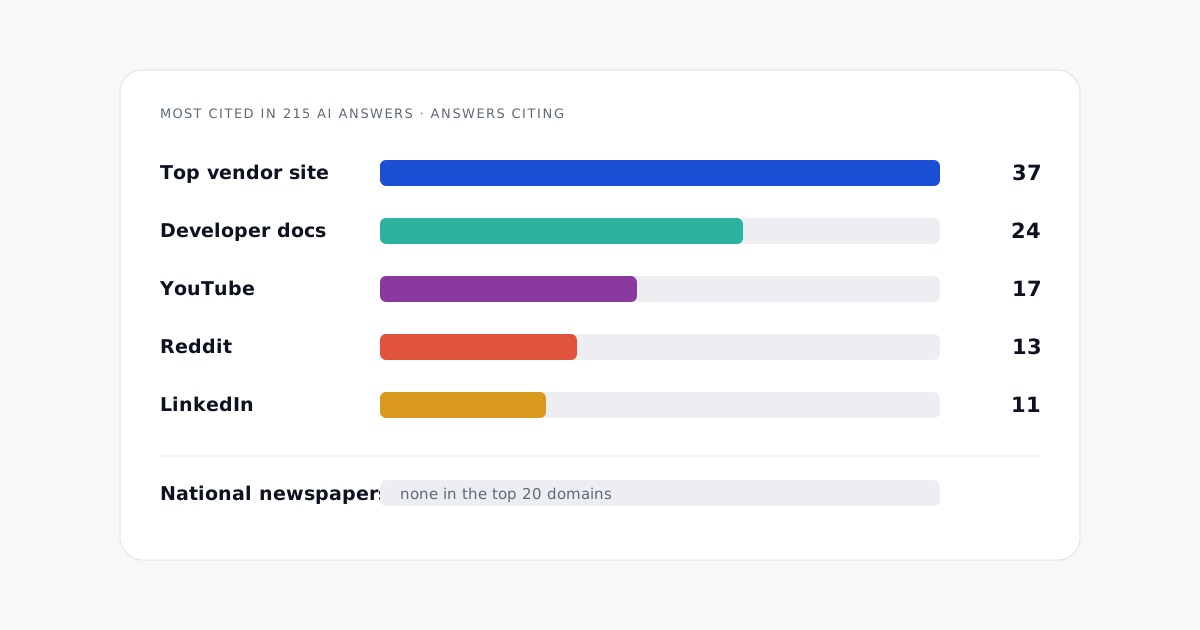
Digital PR for AI visibility: how to get your brand cited in ChatGPT, Gemini and Perplexity
Assistants cite a different set of sites than the ones PR teams pitch. How coverage reaches AI answers, which tactics get your brand cited, and how to measure a campaign on AI mentions.
Read the article →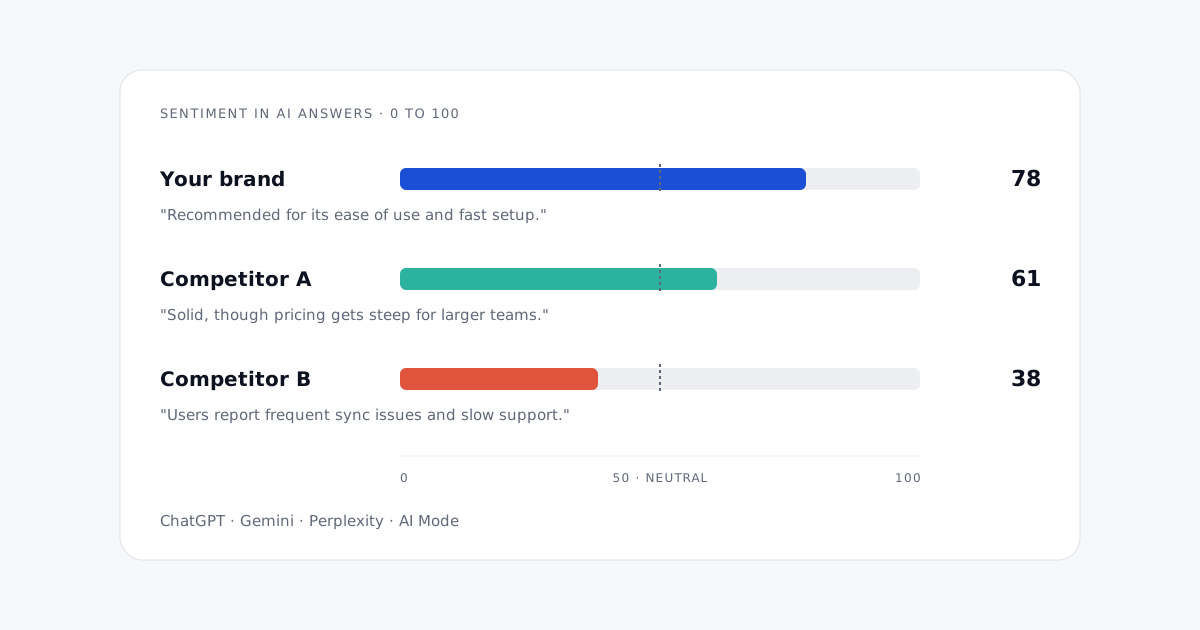
How to track brand sentiment and reputation in AI answers
AI answers have a tone, and buyers read it before your reviews. What to measure, how to check that sentiment scores are right, how to audit your leadership, and what changes the tone.
Read the article →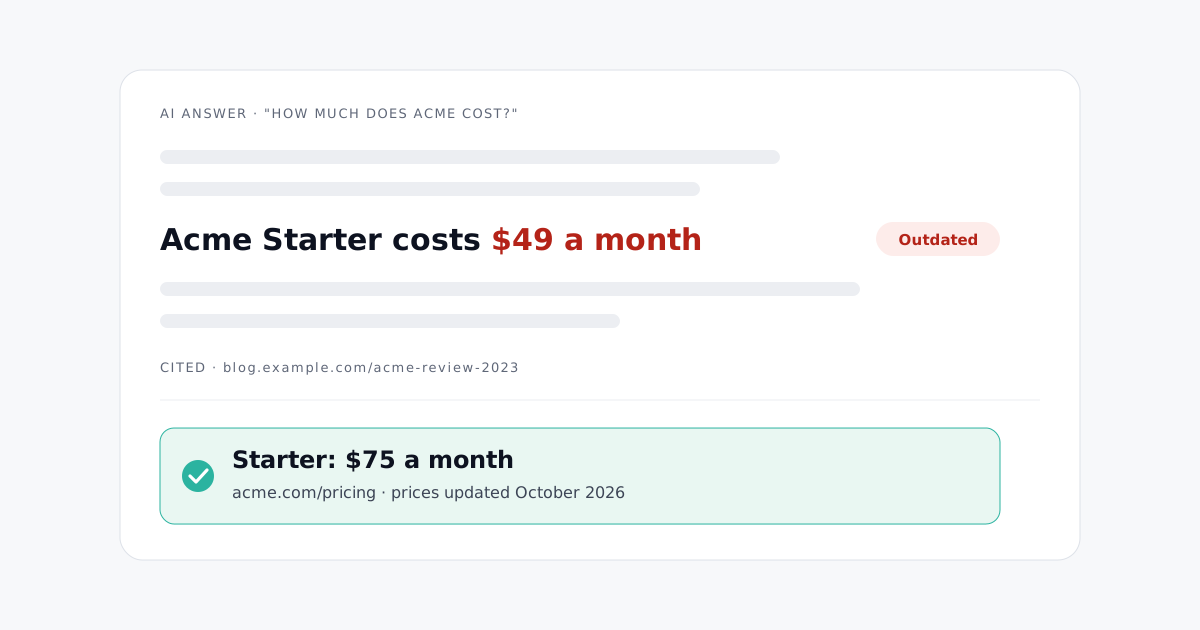
How to fix AI hallucinations about your brand: find the wrong facts, trace them, correct them
Wrong prices, invented features, a CEO who left years ago: AI assistants get brand facts wrong more often than most companies check. How to find the errors and fix them where they come from.
Read the article →