How to audit how AI models perceive your brand, and the sources behind it
When ChatGPT or Gemini describes your company as "reliable but expensive" or "popular with startups, limited for enterprises", that description comes from somewhere: the pages the model read for the question, and what the web said about you over time. This guide is for communications and PR leads who need to audit how large language models perceive their brand, positive or negative, and trace that perception back to the sources that shape it, then change it.
Where an AI model's view of your brand comes from
A model's description of a brand has two origins, and an audit has to separate them:
- The pages it reads at question time. ChatGPT, Gemini, Perplexity, Copilot and Google's AI answers search the web and summarise what they find. The tone of the answer follows the tone of those pages: a critical review thread cited in the answer usually means a critical sentence about you. These sources are listed with the answer, so they can be audited.
- What the model learned in training. When an answer cites nothing, the model repeats what many sources said over time. This part cannot be traced page by page; it moves slowly, through consistent coverage over months.
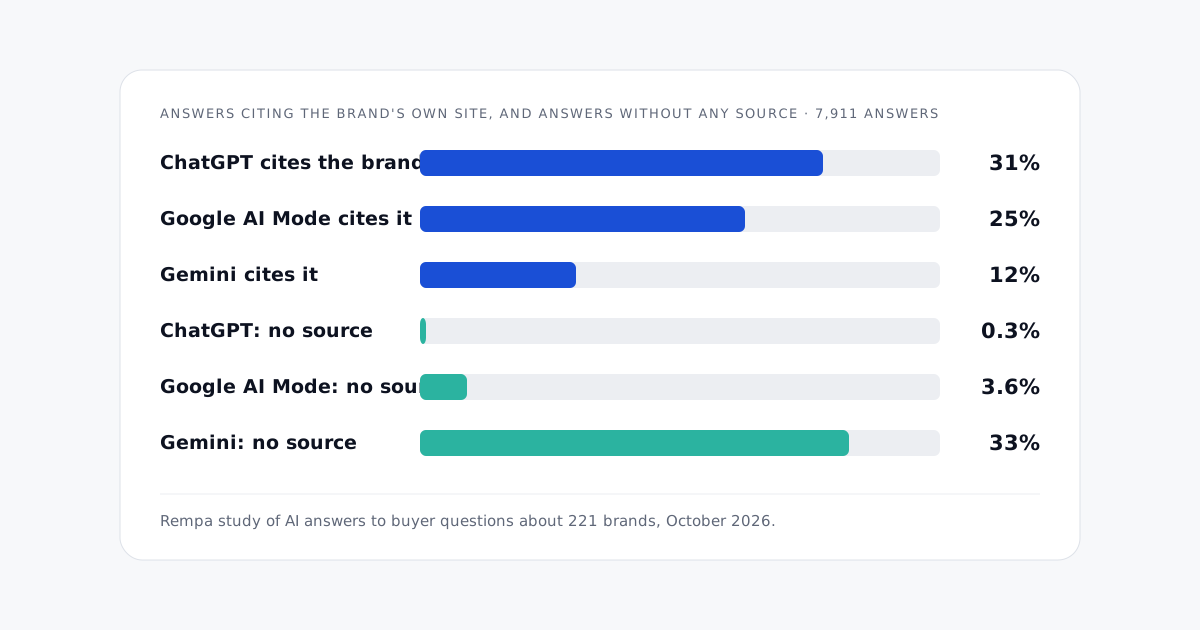
The balance differs by model. In our study of 7,911 AI answers, ChatGPT cited a source in 99.7% of its answers and the brand's own site in 31%; Gemini gave no source at all in 33% of its answers and cited the brand's own site in 12%. So Gemini's view of you rests more on third-party pages and on training, and ChatGPT's leans more on what your own site says.
Your own site matters most when it is read: when an answer cited the brand's own site, it named the brand in 97% of cases, against 18% when it did not.
How to audit the sources behind your brand's perception
1. Ask the questions that make a model describe you
Perception shows on evaluative questions, not only on "best tools" lists. Write them per market and language:
- Direct: "is [brand] reliable?", "[brand] reviews", "what are the downsides of [brand]?"
- Comparative: "[brand] vs [competitor]", "alternatives to [brand]"
- Category: "best [category] for [buyer]", where the model describes several brands side by side
- Corporate: "who runs [company]?", "is [company] a good employer?", "what happened with [company] in [year]?"
2. Collect the answers with their sources, model by model
Ask each question in each model your audiences use (ChatGPT, Gemini, Perplexity, Copilot, Google AI Overviews and AI Mode), from the right country, in clean sessions, and keep the full text with every cited page. Repeat over at least two weeks: answers vary from day to day, and one answer is an anecdote.
3. Score the tone, and write down what is said
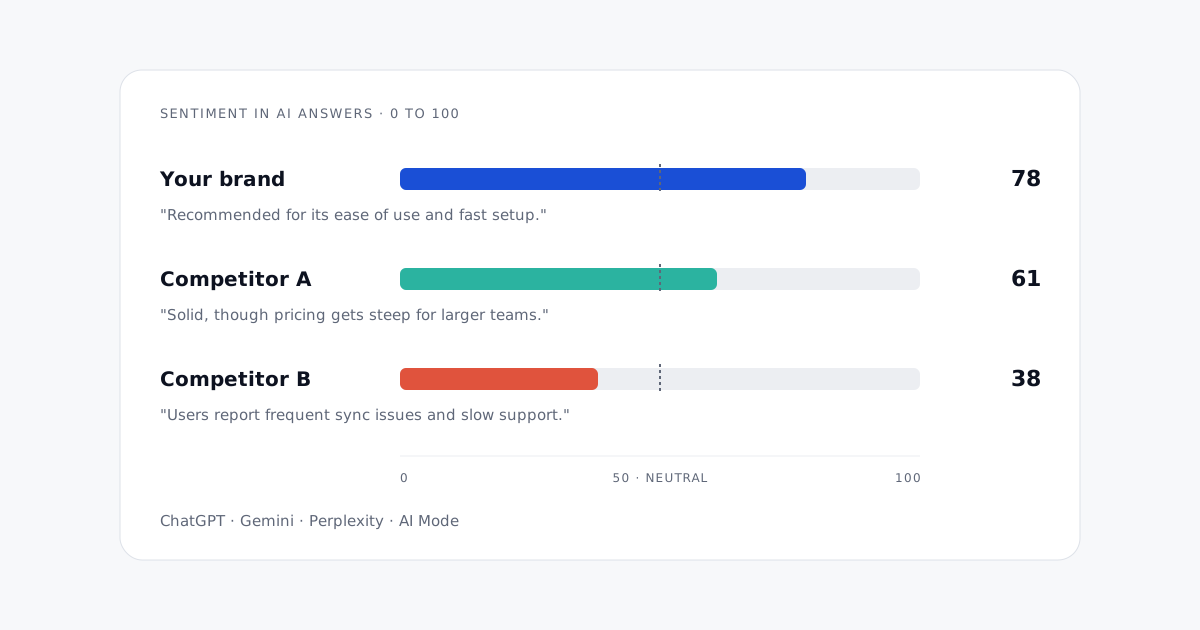
For each answer that names you, record a tone score with the reason behind it, then the claims themselves: the strengths, weaknesses and words the model attaches to you ("expensive", "easy to set up", "slow support"). The claims matter more than the score: they are what you can trace and correct.
4. Link each claim to the sources of that answer
Build one table: claim, model, the pages cited in the answers that make it, and how often. Start with the negative and the wrong claims. A claim that appears every time a given review thread, comparison article or old news story is cited has found its source.
5. Classify the sources by what you can do about them
| Kind of source | How it shapes the description | What you can do |
|---|---|---|
| Your own site | The model quotes your positioning, prices and claims, or fills the gaps from elsewhere | State who you serve, what you do better and what you cost, in plain sentences; fix outdated pages |
| Comparisons and "best" articles | Give the model its pros and cons for each brand | Send the author current facts; publish your own fair comparison |
| Review platforms and forums | Supply the critical sentences: support, bugs, pricing complaints | Answer criticism publicly, show what changed, ask satisfied customers for reviews |
| News and trade media | Set the corporate story: leadership, incidents, funding, controversies | Give journalists recent facts to quote; make sure the latest version of a story is published |
| Competitors' pages | Their "vs" and "alternatives" pages describe you on their terms | Publish your own comparison; correct factual errors with the competitor where needed |
| Outdated pages | Old prices, discontinued products, former executives | Update or redirect your own; ask third parties to update theirs (see fixing AI errors about your brand) |
6. Act on the sources, then measure again
Prioritise the sources cited most often in the answers that carry a negative or wrong claim. After each action, track the same questions: the claim should appear less often, and the answers citing the corrected page should change tone. For the part that comes from training, expect months, not weeks, and keep the facts consistent everywhere.
Auditing the digital PR sources that influence perception
For a PR team, the audit turns into a list of publications ranked by their influence on how models describe the brand:
- How often each publication is cited in answers about your brand and category, per model.
- What its cited pages say about you: named or not, in what terms, positive or negative.
- Whether the claims in the answers match it: when a model repeats a publication's wording, that publication is shaping the description.
- How recent the cited pages are: an old article cited every week is a story that needs a newer version.
The placements worth pursuing are on the sites already cited for your questions, where a new article gives the model a recent opinion to quote. Coverage on sites the models never cite builds reputation, but rarely changes the answer. Our guide to digital PR for AI visibility details the tactics.
Platforms to analyse whether LLMs describe you positively or negatively
Social listening tools read social networks and news, not AI answers. To know how models describe you, use an AI visibility platform that reads the answers themselves, and check that it gives you:
- A tone score per answer, with its reason, so you can check it against the text and spot misreads.
- The breakdown by model, topic and market: perception often differs between ChatGPT and Gemini, and between countries.
- The claims, not only a score: the strengths, weaknesses and words attached to your brand and your competitors.
- The sources of each answer, so a negative claim can be traced to the pages behind it.
- Every answer kept, for the evidence your stakeholders will ask for.
Peec AI, Profound, Otterly.AI and Semrush report sentiment in AI answers; Peec AI adds brand attribute scoring and the objections assistants raise, and Semrush the narratives associated with a brand. Our comparison of AI visibility tools covers prices and coverage.
With Rempa: each brand named in each answer is scored from 0 to 100 with a one-sentence reason, for you and your competitors. The Perception page sums up, per model and per topic, how the AI models describe each brand: a short profile, its strengths and weaknesses, the words they use, the split of positive, neutral and negative answers, and the excerpts behind them. Every answer keeps its cited pages, and the Sources page opens the answers that cite a given website, so you can read what the answers built on it say about you.
Mistakes in AI perception audits
- Reading one answer per model. Tone varies between days; read the share of positive and negative answers over weeks.
- Trusting a score without its reason. Automated scoring misreads irony, comparisons and quoted criticism.
- Auditing only "best tools" questions. The critical descriptions show on "is it reliable", "downsides" and "vs" questions.
- Treating every source the same. A page cited in half the answers matters more than ten that are never cited.
- Fixing your site only. On Gemini especially, the description often rests on third-party pages.
Frequently asked questions
How can communications leads audit sentiment and brand perception across major generative AI models?
Ask each model the questions that make it describe the brand (reliability, reviews, downsides, comparisons, corporate questions), from the right markets, over at least two weeks. Score the tone of each answer with its reason, record the strengths and weaknesses it states, and compare by model and topic. Then trace the negative or wrong claims to the pages each answer cites.
What are the best platforms to analyse whether large language models describe our business positively or negatively?
AI visibility platforms that read the answers themselves: Rempa, Peec AI, Profound, Otterly.AI and Semrush report sentiment in AI answers. Choose one that scores each answer with a reason, breaks the results down by model and market, lists the strengths and weaknesses attached to your brand, and keeps the sources of each answer so you can trace a claim.
How do we audit the digital PR sources that influence how LLMs perceive and describe our corporate brand?
List the pages cited in the answers that describe your brand, rank the publications by how often they are cited, and compare what their pages say with the claims in the answers. The publications that are cited often and whose wording the models repeat are the ones shaping the description: they are where to place recent, accurate coverage.
Can we change how ChatGPT or Gemini describes our brand?
Yes, through the sources: correct your own pages, get current facts into the comparisons and publications they cite, answer criticism on review sites and forums, and publish the facts that answer recurring weaknesses. Answers built from web search can change within weeks; what models learned in training changes more slowly.
Why does Gemini describe our brand differently from ChatGPT?
They read different pages. On the same question, ChatGPT and Gemini share 8.3% of their cited websites on average in our study, and Gemini cites the brand's own site less often (12% of answers against 31%), so its description relies more on third-party pages and training.
More from the blog
How to track brand sentiment and reputation in AI answers
AI answers have a tone, and buyers read it before your reviews. What to measure, how to check that sentiment scores are right, how to audit your leadership, and what changes the tone.
Read the article →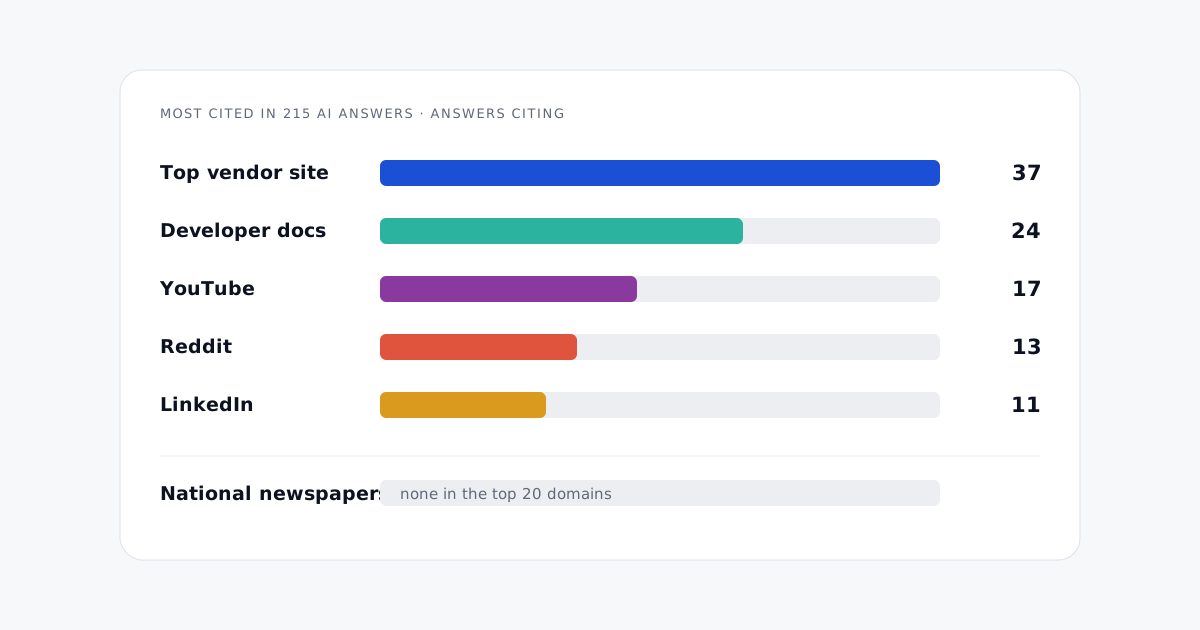
Digital PR for AI visibility: how to get your brand cited in ChatGPT, Gemini and Perplexity
Assistants cite a different set of sites than the ones PR teams pitch. How coverage reaches AI answers, which tactics get your brand cited, and how to measure a campaign on AI mentions.
Read the article →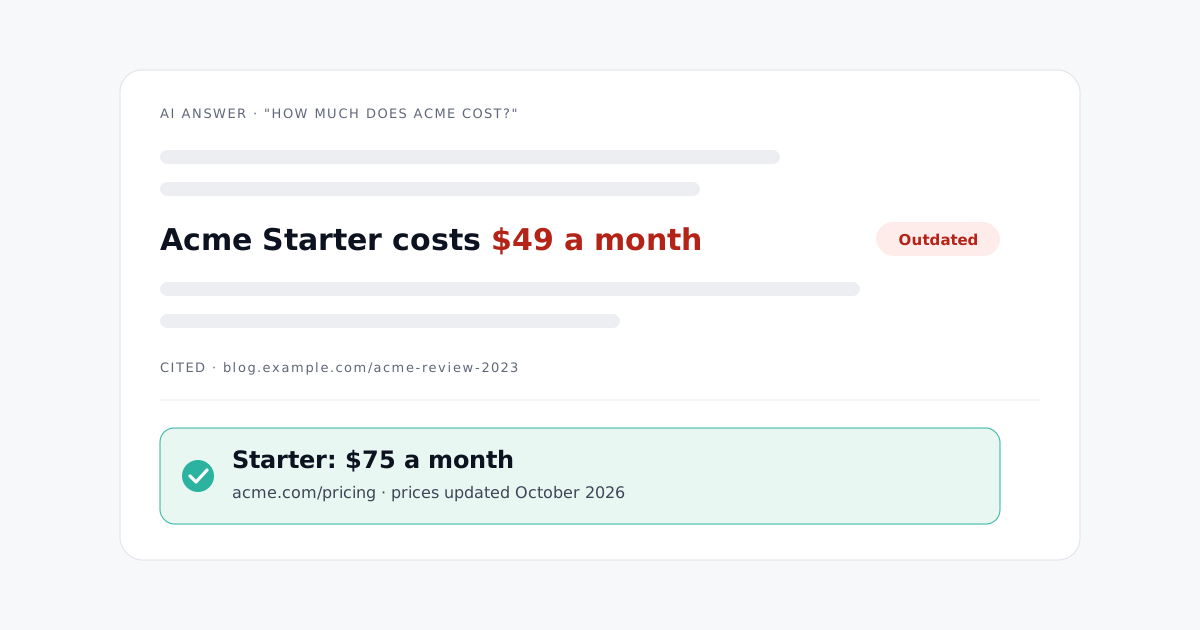
How to fix AI hallucinations about your brand: find the wrong facts, trace them, correct them
Wrong prices, invented features, a CEO who left years ago: AI assistants get brand facts wrong more often than most companies check. How to find the errors and fix them where they come from.
Read the article →