What is Generative Engine Optimization (GEO)? A practical guide for marketing teams
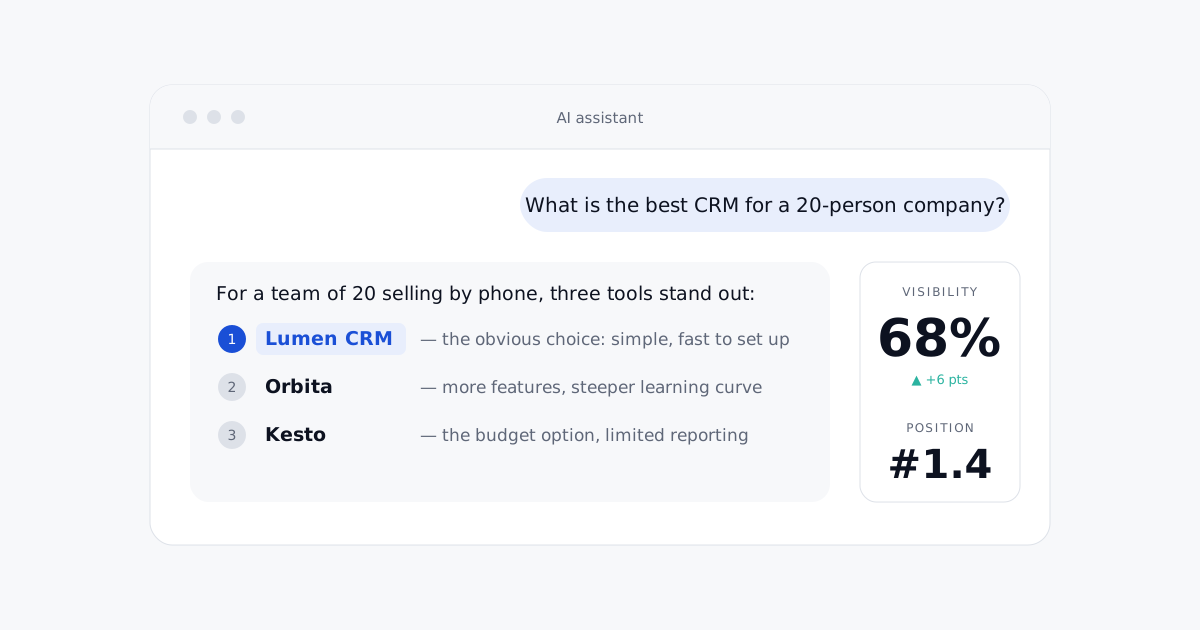
Your customers used to type a few words into Google and scan ten blue links. More and more of them now ask a question to ChatGPT, Gemini, Perplexity or Google's AI Mode, and read one answer. Generative Engine Optimization, or GEO, is the work of making sure that answer names your brand, describes it well and sends people to you.
What GEO means
Generative Engine Optimization is the practice of improving how a brand appears in the answers of generative AI systems: AI assistants (ChatGPT, Claude, Gemini, Copilot), AI search engines (Perplexity) and the AI layers of classic search (Google AI Overviews and AI Mode). Where SEO works on rankings in a list of results, GEO works on three things inside a single answer:
- Presence. Is your brand named at all when someone asks a question you should win?
- Position and framing. When it is named, is it first or last, and how is it described: the obvious choice, a budget option, "also worth a look"?
- Sources. Which pages the AI relies on and cites. They decide what it knows about you, and they get the clicks.
The name is new, the underlying idea is not: be the brand that the best-informed advisor would recommend, and make sure that advisor can find the evidence.
How it differs from SEO
Most of what you learned in SEO still helps: clear pages, real expertise, a site that loads and that other sites link to. But four things change. (For the full comparison, tactic by tactic, see our GEO vs SEO guide.)
There is no page one
An AI answer typically names three to six brands, sometimes one. Being "on page one" means nothing; being in the answer or not is binary, and being first is worth much more than being fourth.
Answers are built from several sources at once
A search engine ranks your page. A generative engine reads a handful of pages, most of them not yours, and writes a synthesis. What a comparison site, a review platform or a Reddit thread says about you often matters more than your own homepage.
Answers vary
Ask the same question twice and you may get two different lists. Ask it from France and from the United States, and the brands change. Measurement has to be statistical: many prompts, repeated over time, not one spot check.
You cannot see the traffic you are losing
When an assistant recommends a competitor, no click ever reaches your analytics. The lost opportunity is invisible unless you measure the answers themselves.
Why it matters now
AI answers sit at the moment of choice. Someone asking "what is the best CRM for a 20-person company" or "which running shoes for a beginner with flat feet" is about to decide. Being absent from that answer is like being absent from the shortlist. And because assistants tend to reuse the same handful of sources, early movers who get into those sources gain a position that is slow to lose.
It is also measurable now. The engines are public, their answers can be collected systematically, and the brands, sources and tone in them can be analyzed. Which brings us to the method.
A GEO method in five steps
1. Write the prompts your customers actually ask
Start from your buyers, not from keywords. For each persona and stage of their decision, write the full questions they would ask an assistant: "which tools…", "is X better than Y for…", "how much does… cost". Group them by topic. Fifty to a few hundred prompts cover most businesses. Keep them in the language and market of your customers; a French buyer asks in French, and gets French brands.
2. Measure where you stand
Ask every prompt to every AI engine you care about, in a clean session, and record the answer: which brands are named, in which order, with what sentiment, and which sources are cited. Repeat at a fixed cadence. This gives you a visibility score, an average position, a share of voice against your competitors, and a map of the sources the engines trust. A tool like Rempa automates this; a spreadsheet and patience work for a first look.
3. Find the gaps
Three gaps are worth most of your attention: prompts where competitors are named and you are not; sources cited often in your category where you do not appear; and answers where you are named with a negative or outdated description.
4. Act on the sources
This is where GEO becomes concrete. Get listed, reviewed and correctly described on the sites the engines cite: comparison sites, review platforms, industry directories, forums, trade press. Publish on your own site the pages that answer the prompts directly, with specific facts (prices, limits, integrations, who it is for) rather than slogans. Keep your name, product names and claims consistent everywhere; assistants reconcile what they read, and contradictions make them cautious.
5. Measure again
Changes in AI answers take weeks, not days, and they are noisy. Compare week over week, by engine and by topic, and judge the trend rather than one update.
Three mistakes to avoid
- Optimizing for one engine. ChatGPT, Gemini and Perplexity rely on different sources and answer differently. Track several, and look at where they disagree.
- Checking by hand, from your own account. Assistants personalize with your history, and you only remember the good answers. Measure in clean sessions, systematically.
- Stuffing pages for machines. Hidden text, keyword lists and fake FAQs do not survive a model that reads for meaning. Specific, verifiable content does.
Where to start this week
Write twenty prompts for your main product and market. Ask them to two engines. Count how often you are named, who is named instead, and which three sites keep being cited. You will know within an hour whether GEO is a problem for your brand, and where the first lever is.
More from the blog

How to build an enterprise GEO strategy: a framework for organic search directors
GEO at enterprise scale is a program, not a list of tactics: the questions to win, a baseline, four workstreams with owners, and the tools to measure it.
Read the article →
How agencies report AI visibility to clients: share of voice, citations and a monthly report template
"What does ChatGPT say about us?" deserves a better answer than a screenshot. The metrics, setup and monthly report template agencies use for AI visibility.
Read the article →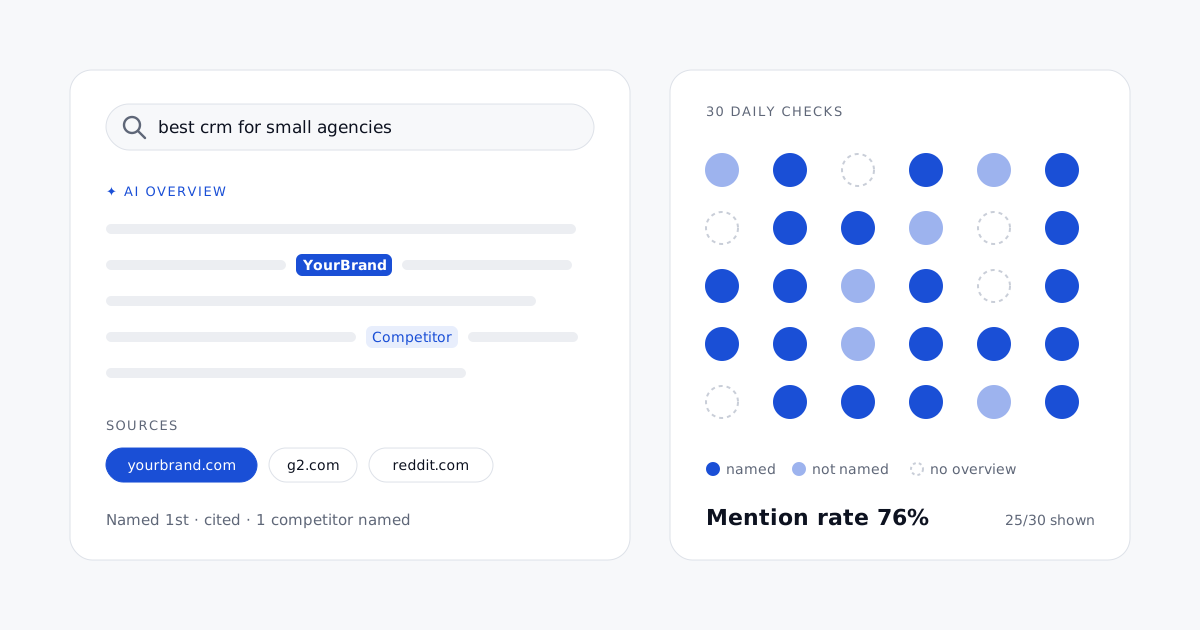
How to track AI Overviews: monitoring brand citations in Google's AI answers, with tool pricing
Search Console will not tell you whether Google's AI summaries name your brand. How to track AI Overviews every day, and what each tool really costs per daily check.
Read the article →