ChatGPT is the new shortlist: how B2B buyers choose vendors with AI

B2B buyers used to build their shortlist from search results, analyst reports and peers. More and more of them now start by asking an AI assistant: "Which tools should a company like ours consider?" The answer is a shortlist of three to six vendors, written in seconds. If you are not on it, you may never hear from that buyer. Here is how that shortlist is formed, and how to get on it.
The shortlist moved upstream
A B2B purchase still involves demos, trials, security reviews and negotiations. What changed is the very first step. Instead of opening ten tabs, a buyer describes the situation to ChatGPT, Gemini, Perplexity or Copilot: company size, industry, budget, tools already in place, the problem to solve. The assistant answers with a few names, a sentence about each, and often a recommendation for that specific situation.
That answer frames everything that follows. The vendors named become the comparison set; the first one named often becomes the reference the others are measured against. Vendors that are not named do not lose a deal: they never enter it, and nothing in their analytics shows it.
How the assistant chooses the names
Three things decide which vendors appear:
- What the model learned about your category. Brands that are widely and consistently described across the web (reviews, comparisons, documentation, discussions) are the ones a model knows to recommend.
- What it reads at the moment of the question. For buying questions, assistants increasingly search the web and summarize the pages they find: comparison sites, review platforms, analyst-style articles, community threads and vendors' own pages.
- How well each vendor fits the situation described. A buyer who mentions "40 people, Salesforce already, strict data residency" gets a different list than a generic question. Vendors whose public information states clearly who they are for, and what they integrate with, are matched more often.
Getting on the shortlist
Say who you are for, in plain words, everywhere
Your home page, product pages, profiles on review platforms and directory listings should all state the same thing: the type of company you serve, the problems you solve, the key integrations, the price range. Assistants match situations to vendors; give them the facts to match on.
Publish the pages buyers ask about
Comparison pages ("you vs a competitor", "alternatives to a competitor"), pricing explained without "contact us" walls where possible, use-case pages for each segment, and integration pages. These are the questions buyers put to assistants, and the pages assistants quote when answering.
Be present on the third-party pages that are cited
Find the sites the assistants cite in your category's answers, and make sure you are listed there, accurately and with recent reviews. One well-maintained profile on a page that keeps being cited can do more than a dozen new blog posts.
Give your customers' voice a place
Detailed reviews and case studies that name the situation ("a 60-person logistics company replacing spreadsheets") give assistants the evidence they need to recommend you for that situation. Ask for them, and make them public.
What it changes for sales and marketing
When buyers arrive after asking an assistant, they often already have a frame: a shortlist, a favorite, objections the assistant mentioned. Sales teams benefit from knowing what the assistants say about you and your competitors, including the weaknesses they repeat, so they can address them before the buyer raises them. Marketing teams can treat "being named for our key buying situations" as a goal in its own right, next to traffic and leads.
Measure the shortlist, not only the traffic
Write down the questions your buyers ask in each segment and market, in their words, and run them across the assistants they use at a regular cadence. Record who is named, in which order, how each vendor is described, and which sources are cited. That gives you your share of the shortlist, its trend, and the exact pages and sources to work on. This is what Rempa automates, with the answers kept so your team can read them.
In short
The first shortlist of many B2B purchases is now written by an AI assistant. Make it easy for the assistant to know who you are for, be present on the pages it reads, and measure whether you are on the list. The vendors that do this early become the reference the others are compared with.
More from the blog

How to build an enterprise GEO strategy: a framework for organic search directors
GEO at enterprise scale is a program, not a list of tactics: the questions to win, a baseline, four workstreams with owners, and the tools to measure it.
Read the article →
How agencies report AI visibility to clients: share of voice, citations and a monthly report template
"What does ChatGPT say about us?" deserves a better answer than a screenshot. The metrics, setup and monthly report template agencies use for AI visibility.
Read the article →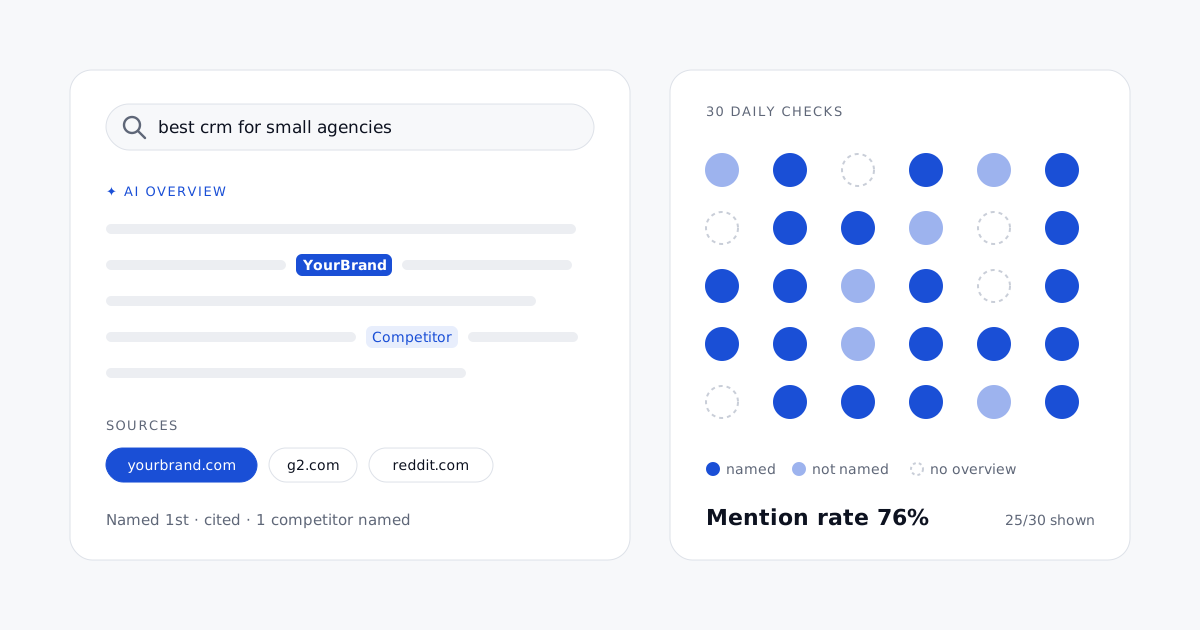
How to track AI Overviews: monitoring brand citations in Google's AI answers, with tool pricing
Search Console will not tell you whether Google's AI summaries name your brand. How to track AI Overviews every day, and what each tool really costs per daily check.
Read the article →